
Table of Contents
- Understanding Sliding Door Roller Assembly Types
- How to Identify Your Sliding Door Rollers
- Measuring and Specifying Sliding Door Rollers
- How to Adjust Sliding Door Rollers for Smooth Operation
- Essential Sliding Door Repair Tools and Step-by-Step Removal
- Sliding Door Maintenance Tips and Lubrication Guide
- Troubleshooting Common Sliding Door Issues
- Conclusion: Getting the Right Rollers for Your Door
Sliding Door Rollers: The Complete Identification & Replacement Guide
Last Updated: July 8, 2026
When your sliding glass door starts dragging or grinding, the problem almost always traces back to the rollers underneath. At Slide Master Hardware, we’ve helped thousands of Australian homeowners identify and replace their sliding door rollers. A faulty roller assembly costs less than $50 to replace but can deteriorate into a $500 door replacement if left unchecked. This guide covers everything you need to know about identifying, measuring, maintaining, and replacing sliding door rollers yourself.
Understanding Sliding Door Roller Assembly Types
Different sliding door designs use fundamentally different roller systems. Tandem roller assemblies use two wheels stacked vertically or side-by-side within a single housing and are common in modern patio doors. Single wheel designs use one larger wheel per roller assembly and appear most often in older Australian homes built before the 1990s.
Tandem Rollers vs. Single Wheel Designs
Tandem rollers dominate modern installations, with each housing containing two wheels that distribute weight across more contact points and provide redundancy. Single wheel rollers are simpler and cheaper but concentrate all weight on one wheel, accelerating wear. The housing dimensions differ dramatically between types, tandem housings are taller and bulkier, while single wheel housings are compact. This difference matters enormously when matching replacements.
Ball Bearing and Concave Wheel Configurations
Inside each roller wheel sits either a ball bearing or a roller bearing assembly. Ball bearings use spheres rolling within a circular race, creating smooth, low-friction rotation ideal for doors opening dozens of times daily. Stainless steel ball bearings resist corrosion, which matters in coastal areas and humid climates across Australia. Standard steel bearings are cheaper but rust faster in damp environments.
How to Identify Your Sliding Door Rollers
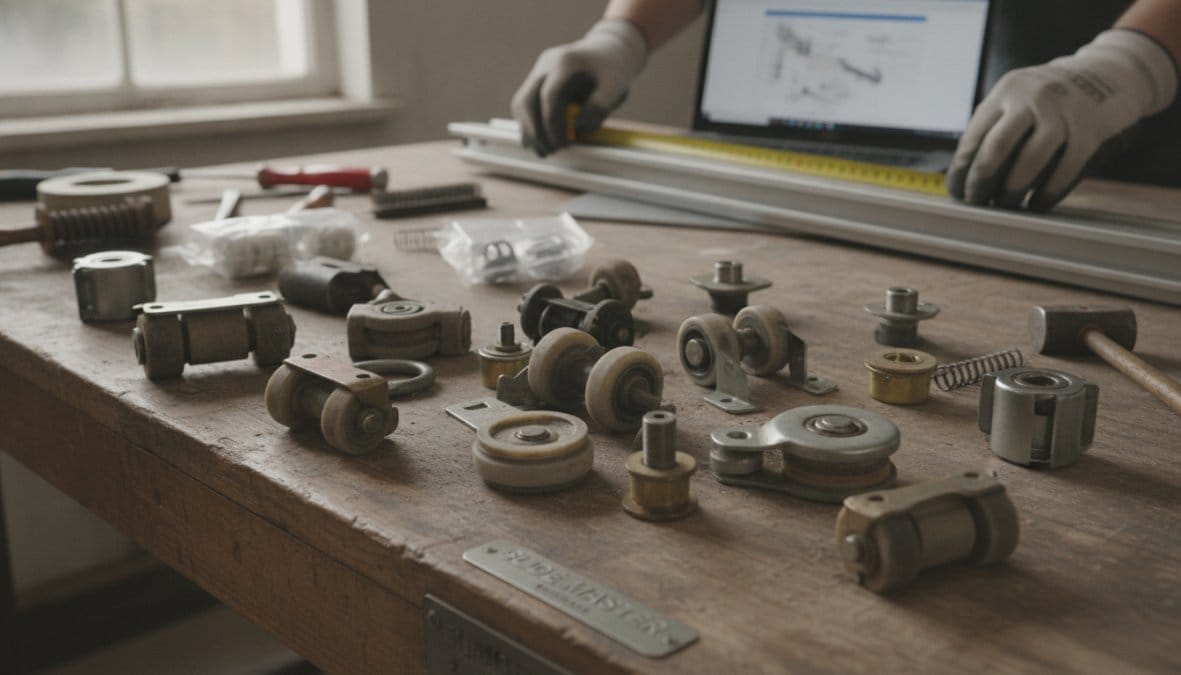
The fastest way to order the right replacement is to remove the old roller and photograph it, or bring it to a supplier. Slide Master Hardware accepts photos and can match your roller to the exact replacement within hours.
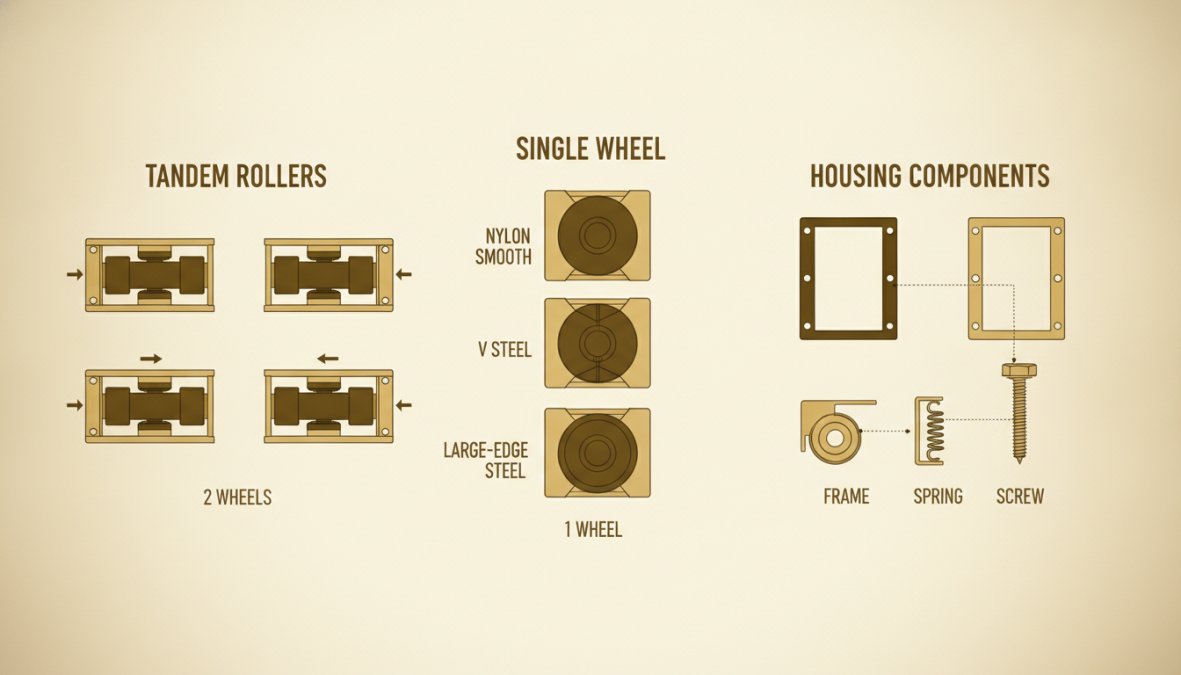
Start by looking at how many wheels sit inside the roller housing. Open your door fully and look underneath, count the wheels. One wheel means single wheel design; two wheels means tandem.
Visual Inspection and Housing Dimensions
Examine the roller housing shape and look for manufacturer markings or part numbers stamped into the housing. Common Australian door brands like Stegbar, Aluminium Sliding Door Systems, and Trend often stamp their part numbers directly on the housing.
Measure the overall width and height of the housing. For tandem rollers, measure from the top of the upper wheel to the bottom of the lower wheel, then measure the width across the widest point. Most Australian standard rollers fall into a handful of common sizes, and your measurements will match one of them.
Matching Rollers to Compatible Door Brands
Most Australian sliding door rollers come from a handful of original equipment manufacturers (OEMs) that supply multiple brands. Prime-Line, Barton Kramer, and SWISCO manufacture rollers appearing under multiple brand names. Look for the brand or OEM name on the housing. If there’s no marking, submit a photo to Slide Master Hardware or a local supplier, they can cross-reference your roller and identify the exact compatible replacement.
Measuring and Specifying Sliding Door Rollers
Accurate measurement is the difference between ordering the right part and wasting money. You’ll need three key measurements: wheel diameter, wheel width, and the C-tab specification.
Start with wheel diameter, the most critical measurement. Place a ruler across the wheel face and read the diameter. Common sizes in Australia include 1 inch, 1.25 inches, 1.5 inches, and 2 inches. Matching the original diameter is essential because the track geometry is designed around that specific wheel size.
Wheel Diameter, Width, and C-Tab Specifications
Wheel width is measured from one side of the wheel to the other. Standard widths are 0.625 inches, 0.75 inches, and 1 inch. Measure the track width and subtract about 0.1 inches for clearance, that’s your target wheel width.
The C-tab is a small metal or plastic extension on the roller housing serving as an adjustment point. If your roller has a C-tab with a screw, you can raise or lower the door by turning the screw. If your old roller has one, your replacement must too.
Write down all three measurements before ordering and include a photo of the old roller from multiple angles.
Material Selection: Steel vs. Nylon Wheels
Steel wheels are hard, durable, and resist deformation under heavy loads, the standard for commercial installations and heavy-duty residential doors. Nylon wheels are quieter, lighter, and resist corrosion naturally. They don’t require as much lubrication as steel wheels and won’t rust in humid environments, but they wear faster under heavy use. Most modern rollers use a hybrid approach: a steel ball bearing assembly mounted inside a nylon wheel, combining durability with corrosion resistance and quiet operation.
How to Adjust Sliding Door Rollers for Smooth Operation
A door that drags or sticks doesn’t always need new rollers, often it just needs adjustment. Most sliding doors have adjustment screws on the roller assemblies that let you raise or lower the door to change pressure on the track.
Locate the adjustment screws on your roller assemblies, usually on the C-tab or side of the housing. Turn the adjustment screw clockwise to raise the door and reduce pressure; turn counter-clockwise to lower the door and increase pressure. Make small adjustments, a quarter turn at a time, and test the door after each adjustment.
Using Adjustment Screws and Track Alignment
The goal is to find the sweet spot where the door glides smoothly without binding or rattling. Check that the track is level by placing a spirit level along its length. If the track is out of level by more than 2-3mm over the door’s width, you have a structural problem that adjustment alone won’t fix.
Inspect the track for dirt, debris, and corrosion. Vacuum out the track thoroughly, then wipe it clean with a damp cloth. If you see rust, clean it with a wire brush. Once the track is clean and the door adjusted, test the operation. If it still binds after adjustment and cleaning, the rollers themselves are likely worn and need replacement.
Essential Sliding Door Repair Tools and Step-by-Step Removal
Replacing sliding door rollers is a DIY task with the right tools. You’ll need a Phillips head screwdriver or Allen key, a spirit level, a measuring tape, and a roller removal tool or flathead screwdriver.
Start by fully opening the door and supporting it with a wooden wedge underneath. Have a helper hold the door steady while you remove the rollers.
Removing Seized Rollers: A Practical Approach
Seized rollers require patience. Apply penetrating oil (like WD-40) to the roller assembly and let it soak for 15-30 minutes. Once the oil has soaked, use a flathead screwdriver or roller removal tool to gently pry the roller out of its mounting bracket. Work slowly and evenly, prying too hard on one side can bend the bracket.
Once the roller is free, slide it out along the track. Install the new roller by reversing the removal process. Slide the new roller into the track, align the mounting holes, and secure it with screws. Don’t overtighten, you want the roller to spin freely. Once both rollers are installed, adjust them using the adjustment screws until the door glides smoothly.
Sliding Door Maintenance Tips and Lubrication Guide
Regular maintenance keeps your rollers working smoothly and extends their lifespan dramatically. A well-maintained roller assembly lasts 10-15 years; a neglected one fails in 2-3 years. The maintenance routine takes 15 minutes per year.
Clean the track quarterly. Vacuum out loose dirt and debris, then wipe the track with a damp cloth. For stubborn corrosion, use a soft wire brush, never use steel wool on aluminium tracks as it can leave particles that accelerate corrosion.
Track Maintenance and Corrosion Prevention
Lubricate the rollers and track twice per year, or more frequently in humid or coastal areas. Use a silicone-based lubricant or light machine oil. Avoid WD-40 as a long-term lubricant, it’s too thin and evaporates quickly. For coastal areas like Perth, consider a marine-grade lubricant with corrosion inhibitors, applied every 3-4 months if you’re within 5km of the coast.
Check the adjustment screws annually to ensure the door hasn’t settled or shifted. Inspect the roller wheels for flat spots, cracks, or excessive wear. A wheel with a flat spot will cause the door to jump or stick.
Troubleshooting Common Sliding Door Issues
Door binds or sticks: Clean and inspect the track for debris, corrosion, or bent sections. If the track is clean and straight, check the door adjustment. Lower the door slightly using the adjustment screws. If adjustment doesn’t help, the rollers may be worn and need replacement.
Door squeaks or squeals: This is almost always a lubrication issue. Clean the track and rollers, then apply silicone lubricant generously. If squeaking persists, the roller wheels may have flat spots or the bearings may be damaged.
Door won’t stay open: This indicates the door is tilted. Check the track level with a spirit level. If the track is out of level, adjust the rollers to level the door.
Door rattles in the track: The door is sitting too high. Lower the door using the adjustment screws until the rattle stops.
Visible rust or corrosion on rollers: Clean the affected area with a wire brush and apply a rust inhibitor or marine lubricant. If corrosion is severe, replacement is necessary. Stainless steel replacement rollers prevent future corrosion in humid or coastal environments.
Conclusion: Getting the Right Rollers for Your Door
Identifying and replacing your sliding door rollers doesn’t require a tradesperson, it requires accurate measurement, the right tools, and patience. Slide Master Hardware specialises in matching your exact roller to compatible replacements. Submit a photo of your old roller and receive expert identification within hours. Our team stocks rollers for all major Australian door brands, ships same-day for orders placed before 1pm AWST, and backs every replacement with a 30-day change-of-mind return policy.
| Measurement | Standard Range | Why It Matters |
|---|---|---|
| Wheel diameter | 1-2 inches | Determines load capacity and track fit |
| Wheel width | 0.625-1 inch | Must match track width for smooth operation |
| Housing type | Tandem or single wheel | Affects door weight capacity and durability |
| Material | Steel, nylon, or composite | Impacts corrosion resistance and noise levels |
| Bearing type | Ball bearing or concave wheel | Determines smoothness and maintenance needs |
Frequently Asked Questions
How do I know if my sliding door rollers are bad?
Signs of worn sliding door rollers include grinding noises, difficulty opening or closing, visible cracks in the wheel, flat spots on the roller surface, and misalignment of the door. If your sliding glass door requires excessive force or sticks at certain points, the roller assembly may need replacement. Inspect the wheels for wear by running your finger across the surface, rough or uneven textures indicate damage requiring immediate attention.
Can you replace rollers on a sliding glass door yourself?
Yes, replacing sliding door rollers is achievable for most homeowners with basic tools and careful attention. You'll need to remove the door from its track, access the roller housing, and install new rollers matching your original specifications. Success depends on correctly identifying your roller type, wheel diameter, and housing dimensions before ordering replacements. If rollers are seized or the door is extremely heavy, professional assistance may be safer.
Are all sliding door rollers universal?
No, sliding door rollers are not universal. Different manufacturers, including Prime-Line, Barton Kramer, and SWISCO, produce rollers with varying wheel diameters, housing dimensions, and c-tab configurations. Compatibility depends on your specific door brand, frame type, and gliding mechanism design. Always measure your existing roller assembly and verify compatibility before purchasing replacements to avoid ordering incorrect parts.
How often should I perform sliding door maintenance?
Perform sliding door maintenance every 3-6 months for regular use. Clean the door track quarterly to remove debris, and apply appropriate lubricant to the rollers and gliding surfaces annually or when you notice increased friction. In high-traffic commercial environments or harsh Australian climates, more frequent maintenance prevents premature wear and extends roller lifespan significantly. Regular lubrication and track adjustment are key to smooth operation.
[EXTERNAL_LINK: Australian Building Codes for sliding door safety requirements | abcb.gov.au]
[EXTERNAL_LINK: Stegbar sliding door product specifications and maintenance guide | stegbar.com.au]
[EXTERNAL_LINK: Prime-Line roller assembly technical documentation and compatibility charts | prime-line.com]
This article was written using GrandRanker