
Table of Contents
- Best Sliding Door Rollers for Aluminium Frames: Quick Comparison
- How We Evaluated Sliding Door Rollers
- Signs of Worn Out Sliding Door Rollers
- How to Replace Sliding Door Rollers: Step-by-Step
- Sliding Door Roller Adjustment Guide for Optimal Performance
- Material Comparison: Nylon vs Steel vs Stainless Steel
- DIY vs Professional Installation: Cost-Benefit Analysis
- Track Repair vs Roller Replacement: When to Choose Each
Last Updated: July 3, 2026
Best Sliding Door Rollers for Aluminium Frames: Quick Comparison
When your sliding glass door starts dragging or sticking, worn rollers are often the culprit. Finding the best sliding door rollers for aluminium frames means matching the correct assembly to your specific frame type, weight capacity, and adjustment requirements. Incompatible rollers lead to uneven door height, binding, and premature track wear. This guide covers what matters when selecting replacement rollers, how to diagnose the problem, and step-by-step installation guidance.
| Roller Type | Best For | Load Capacity | Adjustment Type |
|---|---|---|---|
| Tandem assembly (dual wheels) | Heavy residential and commercial doors | 100-220kg per assembly | End-adjustment without panel removal |
| Single-assembly adjustable | Modular aluminium frames | 50-110kg | Side-accessible M8 screw |
| Multi-fit universal roller | Older legacy door systems | 40-80kg | Wheel height adjustment |
| Heavy-duty industrial bogies | Large-scale commercial installations | 100-300kg | Fixed or adjustable housing |
How We Evaluated Sliding Door Rollers
Quality rollers are assessed on load-bearing capacity, material durability, ease of adjustment, compatibility with aluminium frames, and longevity in Australian climates, particularly coastal areas where salt spray accelerates corrosion.
The Anthony Innovations TraXtar™ Duo supports up to 110kg per assembly (220kg total door weight) with glass-filled nylon housing and polymer wheels. The end-adjustment feature allows height fine-tuning without removing the door panel, saving installation time.
SYSTEAL’s adjustable roller pulley targets modular aluminium profile systems like 30R8 and 40R8 extrusions. The side-accessible M8 screw enables height adjustment after installation, critical when frames settle over time. Carbon steel body construction and polyacetal wheels resist wear in high-use environments.
Before purchasing any roller assembly, [photograph your existing roller from multiple angles and measure the housing width, wheel diameter, and mounting bolt spacing](/buy-aluminium-window-rollers-online-measurement-guide/). This single step prevents ordering incompatible replacements.
Doric sliding door rollers have earned trust across Australian installations. Precision bearings deliver smooth operation, and corrosion-resistant materials handle coastal humidity without degradation.
For DIY homeowners seeking simplicity, the GB DIY Store Multi-Fit Patio Door Roller works across aluminium, uPVC, and timber doors. Double-row bearings increase stability, though this versatility sacrifices some precision compared to frame-specific rollers.
Industrial-grade options like Sugatsune (LAMP) rollers and Jingsheng Hardware bogies serve commercial and marine applications, handling loads from 100kg to 300kg. Virgin nylon wheels prevent flat-spotting, and SS304 stainless steel housing outlasts zinc alternatives in salt-spray exposure.
Signs of Worn Out Sliding Door Rollers
Common Indicators of Damage
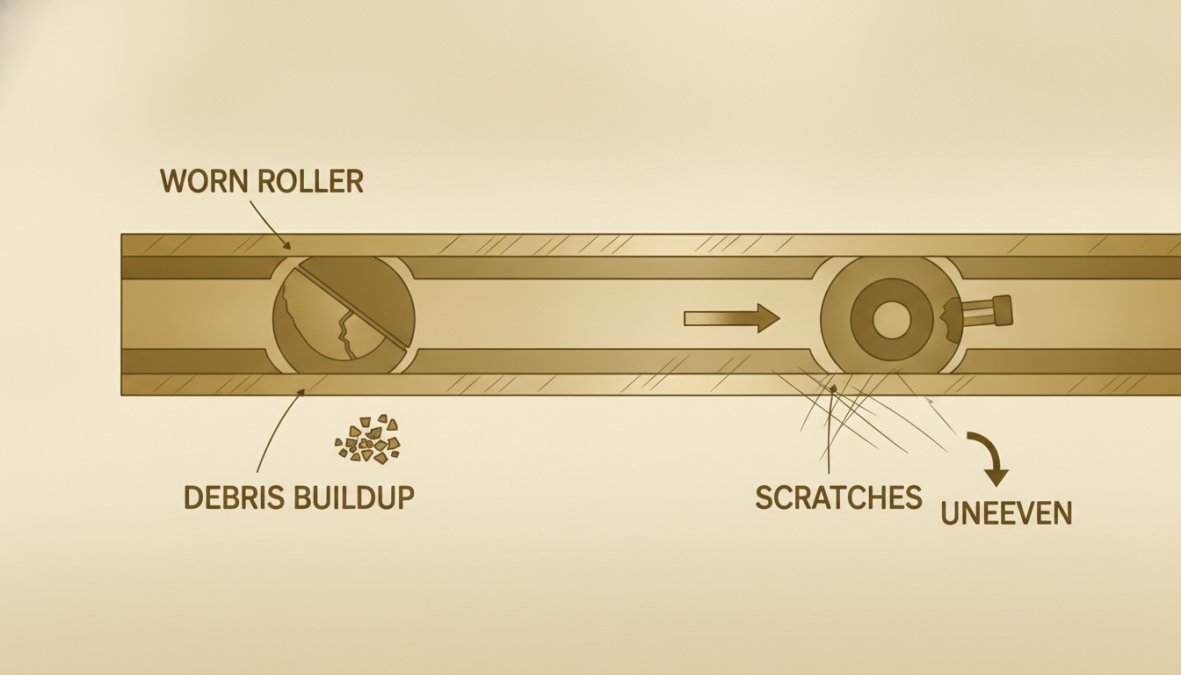
A sliding door requiring increasing force to open signals roller deterioration. Wheels flatten under sustained weight, creating friction that makes movement difficult. The door may stick at certain points, indicating uneven wheel wear or a bent assembly.
Inspect the wheels directly: flat spots, cracks, or chunks missing from nylon wheels confirm wear. Steel wheels should roll smoothly when spun by hand; grinding resistance indicates bearing failure. The housing may show corrosion (white powder on aluminium, orange rust on steel), compromising structural integrity.
Listen for grinding, squeaking, or rattling sounds. Grinding suggests metal-to-metal contact. Squeaking indicates dry bearings or friction. Rattling points to loose mounting bolts or a bent housing.
Track damage often gets misdiagnosed as roller failure. Run your fingers along the track; any dents or warping creates resistance. Lift the door slightly at one end; if it moves freely when unloaded, the rollers are likely fine. If the door remains stiff even when lifted, roller wear is the culprit.
Ignoring worn rollers accelerates track damage. As wheels flatten, they apply uneven pressure to the track, creating grooves that eventually require costly track replacement.
How to Replace Sliding Door Rollers: Step-by-Step
What You’ll Need Before Starting
Gather: cordless drill or driver, adjustable spanner or socket set, flathead and Phillips-head screwdrivers, rubber mallet, spirit level, measuring tape, replacement roller assembly, silicone spray lubricant, and clean cloth.
Wear safety glasses to protect against debris. If your door exceeds 50kg, recruit a second person to support the panel during removal. Place the door on padded supports, never rest it only on rollers.
Installation Steps for Aluminium Frame Doors
Step 1: Remove the sliding door panel (10-15 minutes)
Close the door fully. Locate the roller adjustment screws at the bottom of the frame, typically one at each end. Turn counterclockwise to lower the rollers completely, disengaging the wheels from the track.
Lift the door straight up with even pressure from both ends. Lower it carefully onto padded supports.
Step 2: Access the roller assemblies (5 minutes)
Examine the bottom edge of the door frame. Roller assemblies mount either inside a recessed channel or on the underside. Most aluminium frame doors use recessed mounting. You may need to remove a trim cover or rubber gasket to access mounting bolts.
Photograph the existing assembly before removal as a reference for orientation.
Step 3: Remove mounting bolts (10 minutes)
Using the appropriate socket or spanner, remove the bolts securing the roller assembly. Typically, two to four bolts hold each assembly. Keep bolts organised by location.
If bolts resist removal, apply penetrating oil and wait 5-10 minutes. Gently tap the bolt head with a rubber mallet to break corrosion.
Step 4: Install the new roller assembly (10 minutes)
Position the new assembly in the same orientation as the original. Align mounting holes precisely; misalignment prevents smooth operation.
Insert bolts by hand first to ensure they thread cleanly. Tighten in a cross pattern (opposite corners first) for even pressure. Tighten firmly but not excessively.
Step 5: Reinstall the door panel (10 minutes)
Lift the door back onto the roller assemblies with even pressure from both ends. Ensure the door sits fully on the wheels.
Slowly turn the adjustment screws clockwise to raise the rollers and engage the track. Stop when the door sits evenly without binding.
Step 6: Check alignment and adjust (10 minutes)
Use a spirit level against the top edge of the door frame. The door should be perfectly vertical. If it tilts, adjust the lower side by turning its adjustment screw clockwise.
Open and close the door several times. It should glide smoothly without sticking. Apply silicone spray to the wheels and track, then wipe away excess.
Most roller replacement jobs take 45-60 minutes for a homeowner with basic tools. If you encounter rusted bolts, bent frames, or track damage, contact a professional.
Common Mistakes to Avoid
Mismatched roller assemblies top the list of failures. Always verify housing width, mounting bolt spacing, and wheel diameter before ordering.
Skipping track inspection leads to repeated roller failure. Clean the track thoroughly with a cloth and silicone spray before reinstalling the door.
Over-tightening adjustment screws accelerates wheel wear. Adjust just enough so the door lifts slightly; you should feel resistance but not strain.
Forgetting to lubricate causes squeaking within weeks. Apply silicone spray to wheels and bearings annually.
Installing without a second person risks dropping a heavy door and causing injury. Always have a helper support the panel.
Sliding Door Roller Adjustment Guide for Optimal Performance
Height Adjustment and Tension Settings
Proper adjustment determines whether your door glides effortlessly or binds. The adjustment screws (typically at the bottom corners) control how high the wheels sit in the track. Raising the rollers increases door height; lowering them decreases it.
Correct adjustment means the door sits evenly without tilting. Use a spirit level against the top edge; the bubble should centre perfectly. If the door tilts, turn the lower corner’s adjustment screw clockwise in quarter-turn increments until level.
Tension refers to how firmly the wheels grip the track. Too little causes wobbling; too much creates friction and accelerated wear. The sweet spot: the door should require moderate, even pressure to slide smoothly.
Test by opening the door slowly. If it drifts closed, tension is too high. If it wobbles, tension is too low. Adjust incrementally and test after each change.
Seasonal adjustments help maintain performance. In Perth’s hot summers, aluminium frames expand slightly, potentially increasing friction. Lower the rollers slightly. In winter, raise them slightly if needed.
Material Comparison: Nylon vs Steel vs Stainless Steel
Nylon wheels dominate residential applications because they’re quiet, smooth, and corrosion-resistant. Nylon resists moisture and salt spray better than steel, ideal for Australian coastal properties. The material wears over time, but replacement costs are lower than steel alternatives. Virgin nylon resists flat-spotting better than recycled nylon.
Steel wheels offer higher load capacity and durability for commercial applications. They resist deformation under heavy loads but require regular lubrication to prevent rust and are noisier during operation.
Stainless steel (304-grade) combines steel’s load capacity with superior corrosion resistance. SS304 handles salt-spray exposure without rusting, making it ideal for coastal commercial properties and marine applications. Cost is significantly higher, justified only when corrosion resistance is critical.
Hybrid assemblies pair nylon wheels with stainless steel or aluminium housing, balancing quiet operation with corrosion resistance. This combination suits most Australian residential applications, particularly in humid or coastal regions.
DIY vs Professional Installation: Cost-Benefit Analysis
DIY roller replacement saves labour costs but carries risks if you lack experience. A homeowner typically spends 45-90 minutes on a straightforward replacement; professionals complete it in 30-45 minutes.
In Perth, professional installation typically costs $150-$300. If your roller costs $40-$80, DIY saves $110-$260. However, complications like seized bolts or track damage may cost more than professional labour.
The real risk with DIY is misdiagnosis. Many homeowners assume rollers are the problem when the issue is track damage, frame warping, or misalignment. A professional assesses the entire system before recommending replacement.
Professional installation makes sense if your door is heavy (over 60kg), the frame is damaged, or you’re uncomfortable with power tools. Most professionals offer warranties on their work.
DIY installation suits homeowners with basic tool skills and lightweight residential doors. Professional installation is worth the cost for commercial properties, heavy doors, or suspected frame damage.
Track Repair vs Roller Replacement: When to Choose Each
Many sliding door problems stem from track damage rather than roller wear. A dented or warped track creates friction even with new rollers.
Signs the track needs repair:
- Door binds at specific points (not throughout)
- Door moves freely when lifted slightly
- Visible dents, debris, or corrosion in the track channel
- Door alignment is uneven despite proper roller adjustment
Track repair involves cleaning debris and removing dents with a rubber mallet. Minor dents can be tapped out; severe warping may require professional straightening or replacement.
Signs the roller needs replacement:
- Door requires increasing force to open
- Wheels are visibly flat-spotted or cracked
- Grinding noise during operation
- Door moves stiffly even when lifted
- Bearings feel rough when spun by hand
Replace rollers first. New rollers may improve performance enough to defer track work. If the door still binds after roller replacement, address the track.
Track replacement costs $300-$600 for professional labour plus materials but solves problems new rollers cannot fix. Annual cleaning prevents many problems.
Frequently Asked Questions
How do I know which sliding door rollers I need for my aluminium frame?
First, measure your existing roller assembly's width, wheel diameter, and housing depth. Check your door frame for the brand name or any identifying marks. Take clear photos of the current rollers from multiple angles and submit them to specialists like Slide Master Hardware for expert identification. Knowing the exact model ensures you order compatible replacement parts and avoid costly mistakes.
What are the signs of worn out sliding door rollers?
Watch for grinding or squeaking noises, difficulty opening or closing, visible flat spots on wheels, and uneven door alignment. The door may stick at certain points or require excessive force to operate. Inspect the track for debris, scratches, or visible wear patterns. If you notice the door sagging or rubbing against the frame, the rollers have likely lost their load-bearing capacity and need replacement soon.
Can I replace sliding door rollers on an aluminium frame myself?
Yes, DIY replacement is possible for most homeowners, though it requires care and proper tools. You'll need to remove the door panel, unscrew the old roller assembly, and install the new one with precise height adjustment. However, professional installation ensures correct alignment and weight distribution. Consider DIY if you're comfortable with basic tools; choose professional help if your door is heavy or you're uncertain about the process.
What's the difference between nylon, steel, and stainless steel rollers?
Nylon wheels are lightweight, quiet, and affordable but wear faster under heavy loads. Steel rollers offer better durability and higher weight capacity, making them ideal for commercial doors. Stainless steel (304 grade) provides superior corrosion resistance, essential for coastal or humid Australian climates. For most residential aluminium frames, glass-filled nylon or steel offers the best balance of performance and longevity.
How do I adjust sliding door rollers on an aluminium frame?
Most modern rollers feature height adjustment screws accessible from the side or bottom of the assembly. Use a screwdriver to turn the adjustment screw clockwise to raise the door or anticlockwise to lower it. Make small adjustments (quarter-turn increments) and test the door movement after each change. Proper adjustment eliminates friction, improves smooth operation, and extends roller lifespan significantly.
This article was written using GrandRanker