
Table of Contents
- Understanding Sliding Door Track Types and Materials
- Sliding Door Track Components: Rollers, Guides, and Hardware
- How to Clean Sliding Door Tracks Effectively
- Choosing the Right Sliding Door Track Lubricant
- Sliding Door Rollers: Selection and Maintenance
- Sliding Door Track Replacement: When and How
- Troubleshooting Common Sliding Door Track Problems
- Material Performance Comparison: What Works Best
Sliding Door Track: Ultimate Guide to Types, Installation & Maintenance
Last Updated: July 3, 2026
Need replacement parts? Browse our full range of sliding door rollers to identify and buy the exact wheel for your door, or send us a photo and we will match it for you.
A sliding door track is the foundation of any smooth-operating sliding door system. Choosing the right track can mean the difference between a door that glides effortlessly for decades and one that binds, squeaks, and derails within months. This guide covers everything you need to know about selecting, installing, maintaining, and troubleshooting sliding door track systems.
Understanding Sliding Door Track Types and Materials
The material you choose for your sliding door track determines durability, maintenance requirements, and long-term performance. Most residential and commercial properties in Perth rely on one of three primary track systems.
Aluminium Track Systems
Aluminium track dominates the Australian market for good reason. This material offers an excellent balance of strength, weight, and corrosion resistance, critical factors in Perth’s coastal climate where salt spray and humidity accelerate degradation of inferior materials.
Aluminium tracks typically feature anodized finishes in satin clear or bronze anodized options. The anodizing process creates a protective oxide layer that prevents oxidation and extends the track’s lifespan significantly. Standard residential aluminium tracks handle door weights between 50kg and 150kg per panel, while commercial-grade tracks can support loads exceeding 200kg. Quality aluminium tracks maintain smooth operation through 100,000+ cycles.
When selecting an aluminium track for Perth properties, prioritise anodized finishes over painted alternatives. Anodizing bonds chemically with the aluminium, whereas paint can chip and expose bare metal to corrosion.
Steel and Vinyl Track Options
Steel tracks offer superior strength for extremely heavy doors and high-traffic commercial applications. However, steel requires powder coat finishes to prevent rust and demands more frequent maintenance in humid climates.
Vinyl tracks represent the budget option but come with trade-offs. Vinyl expands and contracts with temperature changes more dramatically than metal alternatives, causing alignment issues. Vinyl also becomes brittle over time when exposed to UV radiation, making it unsuitable for exterior applications. For most residential applications in Perth, aluminium outperforms both steel and vinyl.
Sliding Door Track Components: Rollers, Guides, and Hardware
Understanding how each component functions helps you identify which parts need replacement and why problems develop.
Top Track, Bottom Track, and Jamb Track Functions
The top track suspends the door and carries approximately 80% of its weight. This track must be precisely level; even slight deviations cause the door to drift open or closed on its own. The top track profile features a channel that accommodates roller wheels, with internal guides that prevent side-to-side movement.
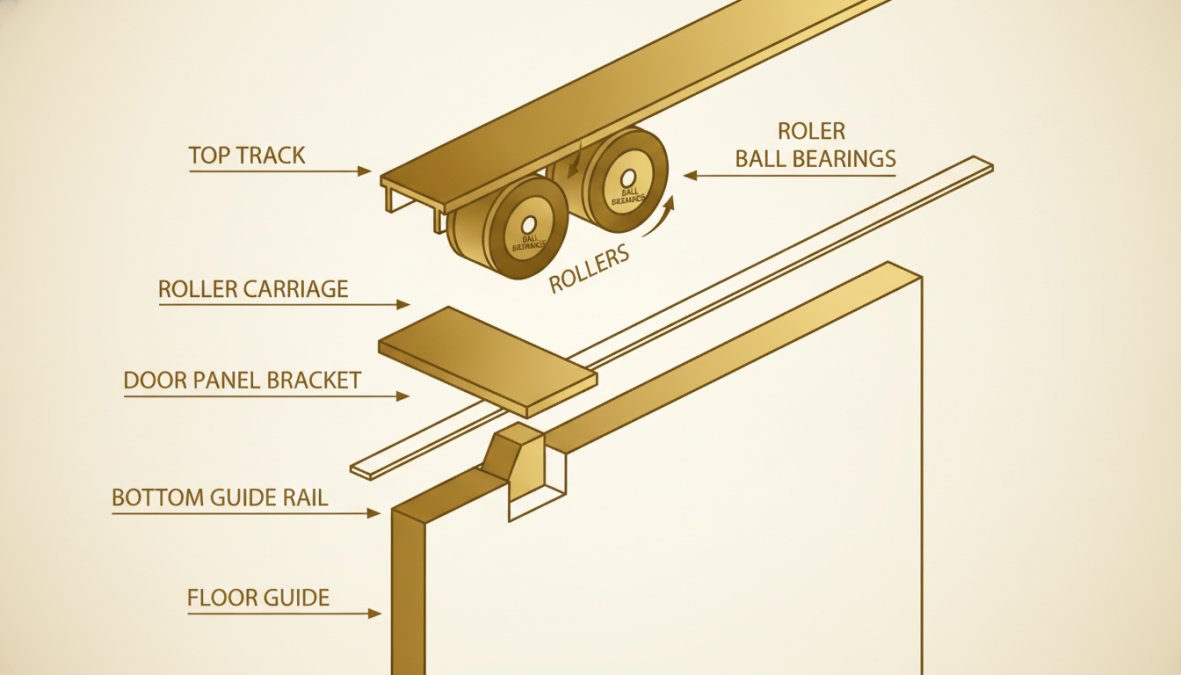
The bottom track serves dual purposes: it guides the door’s lower edge and catches the door if the top track or rollers fail. Most bottom tracks feature a raised lip or guide rail that prevents the door from rolling sideways.
Jamb tracks run vertically along the sides of the door opening. These tracks prevent the door panel from swinging away from the frame and keep it aligned with the opening.
A common mistake is neglecting the bottom track during cleaning. Debris accumulation here causes derailment more often than top track problems. If your door suddenly lifts off the bottom track, check for dirt, leaves, or debris blocking the floor track before assuming hardware failure.
Door Rollers and Guide Systems
Door rollers are precision components that determine how smoothly your door moves. High-quality rollers feature ball bearings or roller bearings that reduce friction significantly. The roller diameter affects performance; larger rollers (typically 25-32mm) distribute loads more effectively and maintain smooth operation longer than smaller alternatives.
The door guides (also called edge guides or side guides) mount on the door panel itself and ride within the jamb track. Worn guides cause the door to rub against the frame, creating friction and noise. Most Australian sliding door systems use either single-wheel or dual-wheel roller assemblies. Dual-wheel systems distribute the load across two contact points, reducing wear on each wheel and extending the life of both the rollers and the track.
How to Clean Sliding Door Tracks Effectively
Dirt, dust, and debris accumulation is the most common cause of sliding door problems. Many issues that seem like hardware failure actually resolve completely with thorough cleaning.
Step-by-Step Cleaning Process
Step 1: Remove loose debris (5 minutes)
Vacuum or sweep both the top and bottom tracks using the crevice attachment. Pay special attention to the bottom track where leaves, dirt, and pet hair accumulate.
Step 2: Flush the tracks with water (5 minutes)
Use a garden hose with moderate pressure to flush both tracks, pushing debris out rather than deeper into the track. For interior doors, use a damp cloth instead.
Step 3: Scrub stubborn buildup (10 minutes)
Mix warm water with a small amount of mild dish soap. Use an old toothbrush or soft-bristled brush to scrub the track channel, paying attention to corners and crevices. For mineral deposits, use white vinegar instead of soap.
Step 4: Clean the rollers and guides (5 minutes)
Wipe the roller wheels with a damp cloth while slowly opening and closing the door. Clean the door’s edge guides with the same method.
Step 5: Dry thoroughly (3 minutes)
Wipe all surfaces dry with a clean cloth. Ensure the bottom track drains completely; standing water accelerates corrosion.
Tools and Materials You’ll Need
A basic cleaning kit requires minimal investment:
- Vacuum with crevice attachment
- Soft-bristled brush or old toothbrush
- Clean cloths (cotton or microfibre)
- Mild dish soap or white vinegar
- Garden hose (for exterior doors)
- Small bucket for mixing cleaning solution
Clean your sliding door tracks quarterly in Perth’s climate. The coastal air and dust mean tracks accumulate debris faster than in inland areas.
Choosing the Right Sliding Door Track Lubricant
After cleaning, proper lubrication ensures smooth operation and protects the track from corrosion. However, the wrong lubricant creates more problems than it solves.
Dry lubricants (like PTFE-based products) are ideal for sliding door tracks. These lubricants create a thin, slippery coating without attracting dust. They remain effective for months and don’t accumulate like wet lubricants. Apply dry lubricant sparingly; a light coating is all that’s needed.
For aluminium tracks, use lubricants compatible with anodized finishes. Silicone-based dry lubricants are generally safe, but test on an inconspicuous area first. Apply lubricant to the roller wheels and track channel with a small brush, then slowly open and close the door several times to distribute it evenly. Wipe away excess with a clean cloth.
For Perth’s coastal climate, reapply lubricant every 6-8 months. The salt-laden air and humidity accelerate lubricant breakdown.
Sliding Door Rollers: Selection and Maintenance
Rollers are the hardest-working components in your sliding door system, yet they’re often overlooked until failure occurs.
The bearing type inside the roller determines performance characteristics. Roller bearings (cylindrical bearings) are more forgiving of slight misalignment and handle heavier loads more effectively than ball bearings. Standard residential rollers are rated for 50,000 to 100,000 cycles. A cycle represents one complete open-close operation. In a typical household, a frequently-used patio door completes 5-10 cycles daily, meaning standard rollers last 15-50 years of normal use.
However, cycle testing assumes proper maintenance and alignment. Misaligned tracks accelerate roller wear dramatically.
Identifying worn rollers is straightforward. Listen for grinding or squeaking sounds during operation; these indicate bearing wear. Visually inspect the roller wheels for flat spots, cracks, or visible wear patterns. If the door suddenly becomes difficult to move despite recent cleaning and lubrication, worn rollers are likely responsible.
Sliding Door Track Replacement: When and How
Track replacement becomes necessary when corrosion, damage, or wear prevents proper door function.
Identifying Worn or Damaged Tracks
Visual inspection reveals most track problems:
- Corrosion spots or rust: Light surface rust can be cleaned and treated, but deep pitting or flaking indicates structural compromise
- Dents or bends: Minor dents rarely affect operation, but bends that alter the track profile cause binding or derailment
- Cracks or breaks: Any crack means immediate replacement
- Worn channels: If the track channel shows visible grooves worn by rollers, replacement is approaching
Test the door’s movement. A healthy track allows smooth, effortless operation. Resistance, grinding sounds, or inconsistent movement indicates track problems.
If your door derails repeatedly despite adjustments, the bottom track may be warped. Stop using the door and arrange replacement immediately.
Installation Guide for New Track Systems
Track replacement requires precision but is achievable for confident DIYers.
Removing the old track:
Remove the door from the track, unscrew the old track from the frame, and clean the mounting surface thoroughly. Inspect the frame for damage and repair any cracks or rot before installing new track.
Installing the new track:
Position the new track in the opening, ensuring it sits level using a spirit level. Mark mounting holes, drill pilot holes, and secure the track with stainless steel screws (essential for coastal areas like Perth). Apply silicone sealant around the track perimeter to prevent water infiltration.
Hanging the door:
Install new rollers on the door if the old ones show wear. Carefully lift the door and position it in the top track, then lower it into the bottom track. Test the movement and adjust the roller height using adjustment screws until the door sits level.
Troubleshooting Common Sliding Door Track Problems
Most sliding door issues trace back to a few common problems.
Track Misalignment and Door Binding Issues
A door that binds usually has alignment problems rather than hardware failure. Check alignment by looking at the gap between the door and frame at the top and bottom. The gap should be even on both sides.
Most doors have adjustment screws on the bottom corners. Turning them clockwise typically raises the door; counterclockwise lowers it. Make small adjustments (quarter-turn increments) and test after each adjustment.
For side-to-side misalignment, check whether the jamb tracks are straight and properly secured. Tighten any loose fasteners, then retest the door’s movement.
Noise, Resistance, and Derailment Solutions
Squeaking or grinding sounds indicate friction between components:
- High-pitched squeaking: Usually means the rollers need lubrication. Clean the tracks thoroughly, then apply dry lubricant.
- Grinding or scraping sounds: Suggests dirt in the track or worn rollers. Clean first; if grinding persists, rollers likely need replacement.
- Clicking or popping: Often caused by the door moving in and out of the bottom track slightly. Check that the bottom track is level and secure.
Resistance after cleaning and lubrication usually means the door is misaligned, the rollers are worn, or the track is bent or damaged.
Derailment (the door lifting out of the bottom track) requires immediate attention. Clear any debris blocking the bottom track completely. If the problem persists, the track lip may be bent or the top track may be out of level. Never force a derailed door back into the track.
Material Performance Comparison: What Works Best
| Material | Durability | Corrosion Resistance | Maintenance | Best For | Typical Lifespan |
|---|---|---|---|---|---|
| Aluminium (anodized) | Excellent | Excellent | Quarterly cleaning | Most residential, coastal areas | 20-30 years |
| Steel (powder coat) | Superior | Good | Regular maintenance | Heavy commercial doors | 15-25 years |
| Vinyl | Fair | Excellent | Minimal | Budget installations, protected areas | 8-12 years |
Aluminium dominates Australian residential installations. It offers the best combination of strength, corrosion resistance, and low maintenance. Anodized finishes provide protection without the brittleness that painted finishes develop over time.
For Perth specifically, anodized aluminium tracks in satin clear or bronze finishes are the gold standard. The coastal climate’s salt spray and humidity demand corrosion-resistant materials.
Choosing the right sliding door track and maintaining it properly transforms your door from a source of frustration into a reliable, smooth-operating system. Whether you’re dealing with squeaking, binding, or complete failure, the solutions outlined above address the vast majority of sliding door problems. For Perth homeowners and businesses needing exact replacement parts or expert identification of their specific door type, Slide Master Hardware provides fast identification from photos and supplies the correct rollers, tracks, and hardware components for all major Australian brands.
Frequently Asked Questions
What causes sliding door tracks to wear out?
Sliding door tracks wear due to regular use, dirt and debris accumulation, lack of lubrication, and exposure to moisture. The continuous cycle testing of rollers against the track profile creates friction. Without proper maintenance, the track alignment deteriorates, causing binding and accelerated wear on both the track and door rollers.
How do you fix a sliding door that is off the track?
First, clean the entire track assembly thoroughly to remove debris. Check the top track, bottom track, and jamb track alignment using a level. Adjust mounting brackets or shims to correct misalignment. Inspect door rollers for damage, worn rollers may need replacement. Ensure the door is properly seated in the track, then test smooth operation. If problems persist, consult a professional for detailed diagnosis.
Can you replace just the sliding door track without replacing the entire door kit?
Yes, individual track components can often be replaced. You can replace the top track, bottom track, or door rollers separately if they're damaged or worn. However, ensure replacement parts are compatible with your existing door jamb and hardware. Some older or custom installations may require a complete track assembly. It's wise to verify compatibility before ordering replacement parts.
What's the best sliding door track lubricant to use?
Use silicone-based or PTFE (polytetrafluoroethylene) lubricants designed for sliding door tracks. Avoid heavy oils that attract dirt. Apply lubricant sparingly to the track profile and door rollers for smooth operation and quiet sliding. Regular lubrication extends the life of your track assembly and prevents binding. Clean tracks before applying fresh lubricant for optimal results.
This article was written using GrandRanker