
Table of Contents
- Understanding Doric Sliding Door Lock Models
- Doric Door Handle Compatibility: Finding the Right Fit
- Installation Instructions for Doric Sliding Door Locks
- Doric Sliding Door Lock Replacement: When and How
- Doric Sliding Door Lock Troubleshooting and Maintenance
- Security Features and Keying Options Explained
- Conclusion
Last Updated: July 12, 2026
Understanding Doric Sliding Door Lock Models
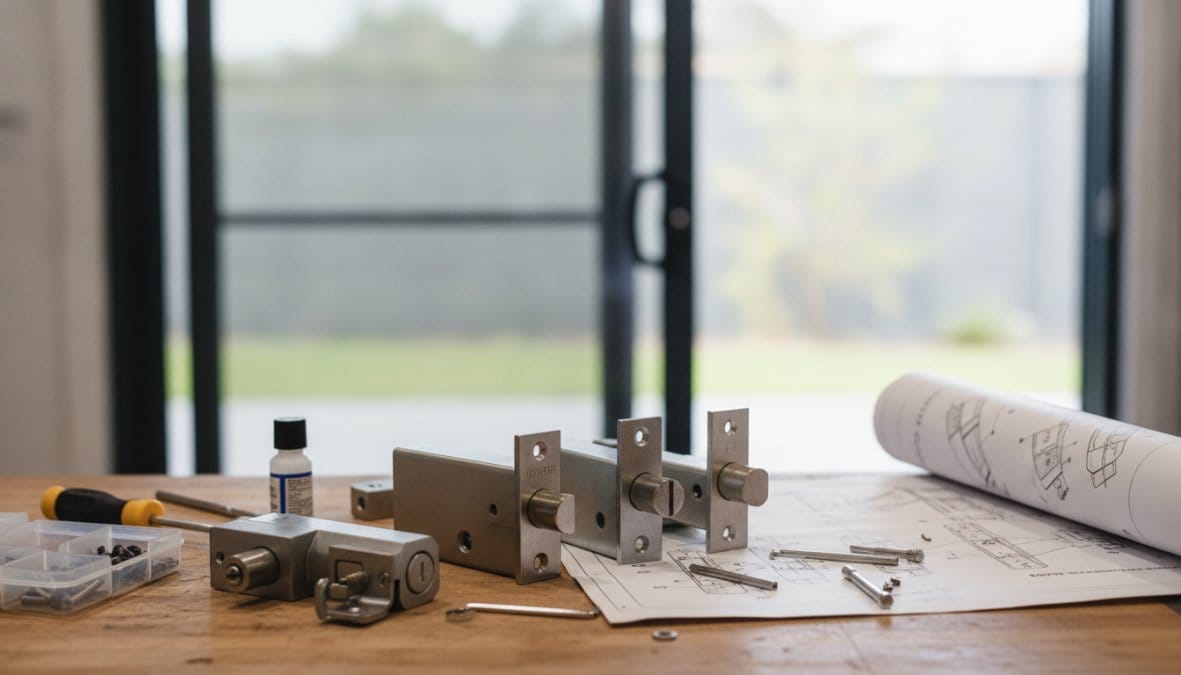
Identifying the correct doric sliding door lock model is essential for avoiding costly ordering mistakes. At Slide Master Hardware, we help customers across Perth and Australia match their existing locks to the correct parts. The doric sliding door lock comes in several distinct models, each designed for specific door types and security requirements.
Key Doric Models: DS1000A, DS27 and Beyond
The DS1000A is one of the most common surface-mounted options, engineered for aluminium sliding doors and patio door installations. It works with both wafer and pin cylinder configurations, giving property owners flexibility when upgrading security.
The DS27 is particularly suited for retrofit applications where space constraints or existing door stile dimensions require a more compact solution. What sets the DS27 apart is its compatibility with narrower door frames, a consideration many installers overlook until on-site measuring.
Beyond these two, you’ll encounter models like the Alpine, Snowy, Bisarra, Biio, and Twiin variants, each engineered for particular chassis types and door configurations. The Advant chassis, for instance, pairs with specific lock models that aren’t universally compatible across all sliding door systems.
Take a clear photo of your existing lock from multiple angles before contacting a supplier. Include shots showing the cylinder tail, handle mounting points, and door stile width. This single step eliminates 90% of ordering errors.
Advant Chassis and Aluminium Door Compatibility
The Advant chassis represents a significant segment of Australian sliding door systems, particularly in homes built or renovated in the last 15-20 years. An Advant chassis uses a specific latching mechanism that requires compatible lock hardware; you cannot simply swap in any doric sliding door lock and expect it to function properly.
When verifying Advant compatibility, always check three key measurements: door stile width, existing cylinder tail length, and the distance from the door edge to the latch point. Many property owners discover compatibility issues only after installation begins, when the lock may physically fit but fail to engage the latching system properly.
Never assume an aluminium door lock from one manufacturer will work with another brand’s Advant chassis. Mixing incompatible components can damage the door frame and compromise security. Always verify the OEM (original equipment manufacturer) specification before purchasing replacement parts.
Doric Door Handle Compatibility: Finding the Right Fit
A doric sliding door lock is only half the equation; the external handle must match your specific lock model and door configuration. Many people overlook this connection, assuming any handle will work with any lock.
External Handle Styles and Door Stile Dimensions
External handles come in several styles: pull handles, lever handles, and folding handles, each with distinct mounting requirements. Door stile dimensions vary significantly across Australian door systems. A narrow stile (typically 35-40mm) requires a handle specifically engineered for that width, while wider stiles (45-50mm or more) use different designs. Measure your door stile thickness before selecting a handle.
The handle’s internal mechanism must also align with your lock’s cylinder tail. Some handles accept wafer cylinders, while others require pin cylinders or specific tail lengths.
Matching Handles to Your Locking Mechanism
Once you’ve confirmed your lock model and door stile dimensions, matching the handle becomes straightforward. Each doric sliding door lock model pairs with specific handle styles. The DS1000A, for example, works with certain handle profiles that won’t fit the DS27.
When you provide a photo of your existing lock and door, compatible handle options can be identified. Some customers prefer to upgrade their handle style at the same time they replace the lock, which is entirely possible provided you select handles engineered for your chosen lock model.
The handle and lock must be mechanically compatible at three points: cylinder tail diameter, mounting hole spacing, and latch engagement depth. Verify all three before ordering replacement parts.
Installation Instructions for Doric Sliding Door Locks
Installing a doric sliding door lock correctly ensures security and smooth operation. Following proper installation steps prevents damage to your door and ensures the lock functions as intended.
Surface Mounted Installation Steps
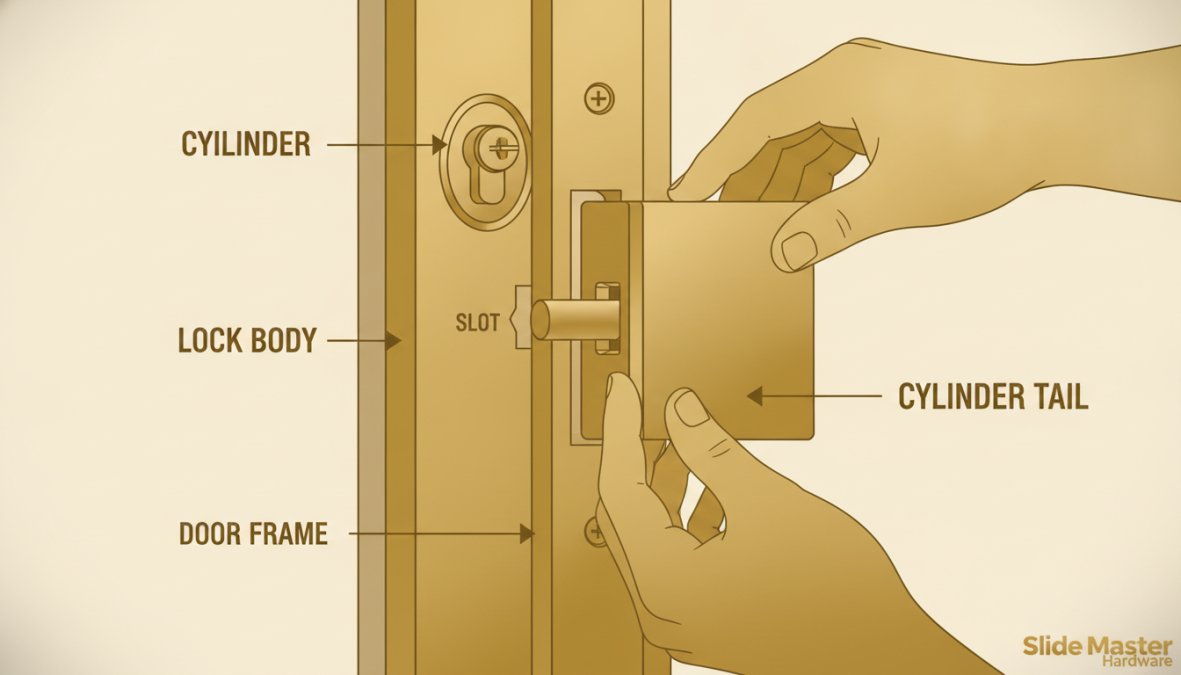
Most residential doric sliding door locks use surface-mounted installation, where the lock body sits on the exterior surface of the door rather than being recessed into it.
Step 1: Prepare the Door and Gather Tools (Time: 5 minutes)
Ensure the door is clean and dry. You’ll need a drill with appropriate bits, a screwdriver set, a measuring tape, and the lock hardware kit. Check that the cylinder tail length matches your existing lock.
Step 2: Mark Mounting Holes (Time: 10 minutes)
Position the lock body on the door stile where you want it mounted. Use the template provided with your lock kit to mark hole positions. Measure from the door edge and top/bottom to ensure the lock sits at the correct height, typically 800-1000mm from the floor for residential applications. Use a spirit level to confirm the lock body is perfectly vertical.
Step 3: Drill Mounting Holes (Time: 10 minutes)
Drill holes at the marked positions using the correct drill bit size for your fasteners, typically 4-5mm for standard stainless steel screws. Drill slowly to avoid cracking the aluminium door frame. If filling existing holes from an old lock, use epoxy filler and allow it to cure before drilling new ones.
Step 4: Install the Lock Body (Time: 5 minutes)
Insert the lock body into position and secure it with the provided fasteners. Tighten screws evenly without overtightening, as this can strip the holes or warp the lock body.
Cylinder Tail Positioning and Keying Setup
Step 5: Insert the Cylinder (Time: 5 minutes)
Slide the cylinder into the lock body from the exterior side. The tail should insert fully until it seats against the internal mechanism. If the cylinder feels resistance before fully seating, check that the tail length matches your lock model.
Step 6: Secure the Cylinder (Time: 3 minutes)
Use the retaining screw (usually located on the interior side of the lock) to secure the cylinder. This prevents the cylinder from being pushed out or pulled free.
Step 7: Test Key Operation (Time: 5 minutes)
Insert your key and turn it through a full rotation. The key should turn smoothly without binding or resistance. If you feel grinding or catching, remove the cylinder and inspect the tail for debris or damage.
Many installers skip testing at this stage. A few minutes of testing now prevents callbacks later. Smooth key operation confirms proper cylinder seating and latch engagement.
Step 8: Install the Handle (Time: 10 minutes)
Position the external handle over the cylinder and secure it with the provided fasteners. Ensure the handle sits flush and doesn’t rock or move. Test that turning the handle activates the locking mechanism smoothly.
Doric Sliding Door Lock Replacement: When and How
Knowing when to replace your doric sliding door lock prevents security failures and avoids emergency lockouts.
Identifying When Replacement is Necessary
A lock requires replacement when it no longer functions reliably. Key signs include: the key sticks or requires excessive force to turn, the latch fails to engage even when the handle is fully operated, the lock body is visibly corroded or damaged, or the key breaks inside the cylinder.
Age also matters. Locks exposed to harsh Australian weather, salt spray in coastal areas, and intense UV exposure degrade faster than sheltered locks. A lock in service for 15-20 years may be due for replacement simply because wear has accumulated.
Security considerations sometimes drive replacement decisions. If you’ve lost a key and can’t locate the original key blank specification, replacing the lock ensures only you have access. Similarly, if you’re concerned about previous owners or tenants retaining copies of keys, a new lock with fresh keying provides peace of mind.
Sourcing OEM Replacement Parts
OEM (original equipment manufacturer) parts ensure compatibility and quality. When you provide a photo or the model number of your existing lock, OEM replacement parts can be sourced or a compatible alternative engineered for your door system can be identified.
Non-OEM or generic replacements often introduce compatibility issues. A generic lock may fit into your door but fail to engage the latching mechanism properly, or the handle may not mount correctly. OEM parts cost slightly more upfront but eliminate these risks entirely.
Sourcing OEM parts takes longer but guarantees compatibility. Generic alternatives save money upfront but often cost more in time and frustration when they don’t fit properly.
Doric Sliding Door Lock Troubleshooting and Maintenance
Most doric sliding door lock problems stem from simple issues that maintenance can address. Understanding common problems and their fixes extends lock life and prevents premature replacement.
Common Issues and Quick Fixes
The key turns but the latch won’t engage. This usually indicates the cylinder tail isn’t properly seated or the latch mechanism has debris blocking it. Remove the lock body, inspect the tail for damage, and clean the latch channel with a dry cloth. Reinstall and test.
The key sticks or requires excessive force. Dirt, salt spray residue, or corrosion inside the cylinder causes this. Apply a dry lubricant (graphite powder or PTFE-based lock lubricant) into the keyway and work the key back and forth several times. Avoid oil-based lubricants, which attract dirt and worsen the problem.
The lock body rocks or moves when you apply pressure. Check all fastening screws and tighten them evenly. If screws are tight but movement persists, the mounting holes may have stripped. Remove the lock, fill the holes with epoxy filler, allow it to cure, drill new holes slightly offset from the originals, and reinstall.
The handle won’t turn or feels grinding. This suggests the handle isn’t properly aligned with the cylinder tail or the tail is incorrect. Loosen the handle fasteners, realign it, and retighten. If grinding persists, the cylinder may need replacement.
Regular Maintenance to Extend Lock Life
Quarterly maintenance prevents most common problems. Inspect the lock body for visible corrosion or damage. If you see white powder (aluminium oxide) or rust staining, clean the area with a soft brush and apply a light coat of silicone spray to protect against further corrosion.
Test key operation monthly. Smooth operation indicates the lock is functioning properly. In coastal areas or high-salt-spray environments, increase maintenance frequency to monthly, as harsh conditions accelerate corrosion.
Never use oil-based lubricants on sliding door locks. They trap dirt and accelerate wear. Stick to dry lubricants like graphite powder or PTFE-based lock sprays designed for door hardware.
Security Features and Keying Options Explained
A doric sliding door lock’s security level depends on both the physical lock design and the keying system you choose.
Wafer Cylinder vs Pin Cylinder Locks
Wafer cylinders use flat, spring-loaded wafers that align when the correct key inserts. They’re simpler to manufacture, less expensive, and suitable for residential applications where moderate security suffices. Wafer locks are easier to rekey if you need to change who has access.
Pin cylinders use spring-loaded pins of varying heights that must align precisely for the key to turn. They’re more complex, more expensive, and significantly more resistant to picking or bumping. Pin cylinders suit applications where higher security is essential: commercial properties, rental units with frequent turnover, or homes in high-crime areas.
The difference in security is substantial. A wafer cylinder can be defeated with basic tools; a pin cylinder resists casual tampering. For most Australian residential applications, a quality pin cylinder provides appropriate security without excessive cost.
Multi-Point Latching Systems and Security Ratings
Some advanced doric sliding door locks incorporate multi-point latching, where the lock engages at multiple points along the door frame rather than a single point. This distributes force across the door, making it significantly harder to force open. Multi-point systems are more common in commercial installations or high-security residential applications.
Security ratings depend on the lock’s resistance to forced entry, picking, and environmental factors. Australian Standards AS 4145 provides guidance on residential lock security. Most quality doric locks meet or exceed these standards when properly installed.
The latching system’s robustness matters as much as the cylinder type. A pin cylinder paired with a weak latch provides less security than a wafer cylinder with a heavy-duty multi-point latch.
Security comes from multiple factors: cylinder type, latch design, mounting strength, and material quality. A complete security assessment considers all four, not just the cylinder.
Conclusion
Selecting, installing, and maintaining a doric sliding door lock requires attention to compatibility, proper technique, and regular care. Many property owners struggle with identification because manufacturers use different model numbers and compatibility rules aren’t always obvious.
Slide Master Hardware eliminates this confusion. Our team in Perth can identify your lock from a photo, recommend compatible replacement parts, and guide you through installation. We stock OEM parts for all major Australian door brands and ship Australia-wide with same-day dispatch for in-stock orders placed before 1pm AWST. Whether you need a DS1000A replacement, handle upgrades, or keying advice, our experts ensure you receive the exact components your door requires.
Australian Standards AS 4145 residential lock security requirements
Aluminium door maintenance guide for coastal Australian properties
Door hardware compatibility checklist for sliding door systems
Frequently Asked Questions
How do I identify which Doric sliding door lock model I have?
Check the lock body for stamped model numbers such as DS1000A or DS27. Examine the door stile width and measure the cylinder tail length. Note whether your handle is external or internal and whether the lock is surface mounted. If you're unsure, photograph the lock from multiple angles and submit images to a specialist retailer for expert identification, many Australian suppliers offer this service to ensure you order the correct replacement.
Can I replace a Doric sliding door lock myself?
Yes, many homeowners can replace a Doric sliding door lock if you have basic tools and follow installation instructions carefully. Surface-mounted models are generally easier than recessed designs. Key steps include removing the old lock, measuring the cylinder tail, positioning the new lock correctly on the door stile, and ensuring proper keying alignment. If you're uncertain about any step, consult the manufacturer's documentation or contact a local hardware specialist before proceeding.
What are common problems with Doric sliding door locks?
Common issues include stiff or difficult key operation, misalignment between the handle and latching system, wear on the wafer or pin cylinder, and corrosion on aluminium doors. Many problems stem from lack of maintenance or dirt accumulation. Regular cleaning with appropriate lubricants, checking alignment, and replacing worn cylinders can resolve most issues. Persistent problems may indicate the lock needs full replacement rather than repair.
Are Doric sliding door lock replacement parts readily available in Australia?
Yes, replacement parts including cylinders, handles, and latching mechanisms are available through Australian hardware suppliers specialising in door and window components. OEM parts ensure compatibility with your specific Advant chassis or aluminium door model. Suppliers often offer expert identification services via photo submission and fast dispatch from Australian warehouses, making it convenient to source the exact parts you need without ordering incorrectly.
This article was written using GrandRanker