
Table of Contents
- Why Correct Measurement Matters When You Buy Aluminium Window Rollers Online
- How to Measure Sliding Window Rollers: Tools and Techniques
- Types of Aluminium Window Rollers: Material and Design Options
- Identifying Legacy and Obsolete Window Roller Parts
- Sliding Window Roller Replacement Guide: Step-by-Step Process
- Troubleshooting Sliding Window Issues: Stuck vs Broken Rollers
- Buying the Right Rollers Online: Avoiding Common Mistakes
- Conclusion: Getting Expert Help to Buy Aluminium Window Rollers Online
Buy Aluminium Window Rollers Online: Complete Measurement Guide
Last Updated: July 3, 2026
Why Correct Measurement Matters When You Buy Aluminium Window Rollers Online
Ordering the wrong size window roller online wastes time and money. Getting measurements right determines whether replacement takes 30 minutes or becomes a frustrating afternoon. This guide walks you through exactly what to measure, what tools you need, and how to identify your specific roller type.
Most online retailers don’t explain why each measurement matters. Below, we’ll show you how to take measurements that guarantee compatibility, identify whether rollers are salvageable or broken, and understand material options (nylon, steel, brass) that affect performance and durability.
Before measuring anything, take a clear photograph of your entire window assembly from the side. This single image helps online retailers confirm you’ve measured correctly and prevents costly ordering mistakes.
How to Measure Sliding Window Rollers: Tools and Techniques
Essential Tools for Accurate Measurement
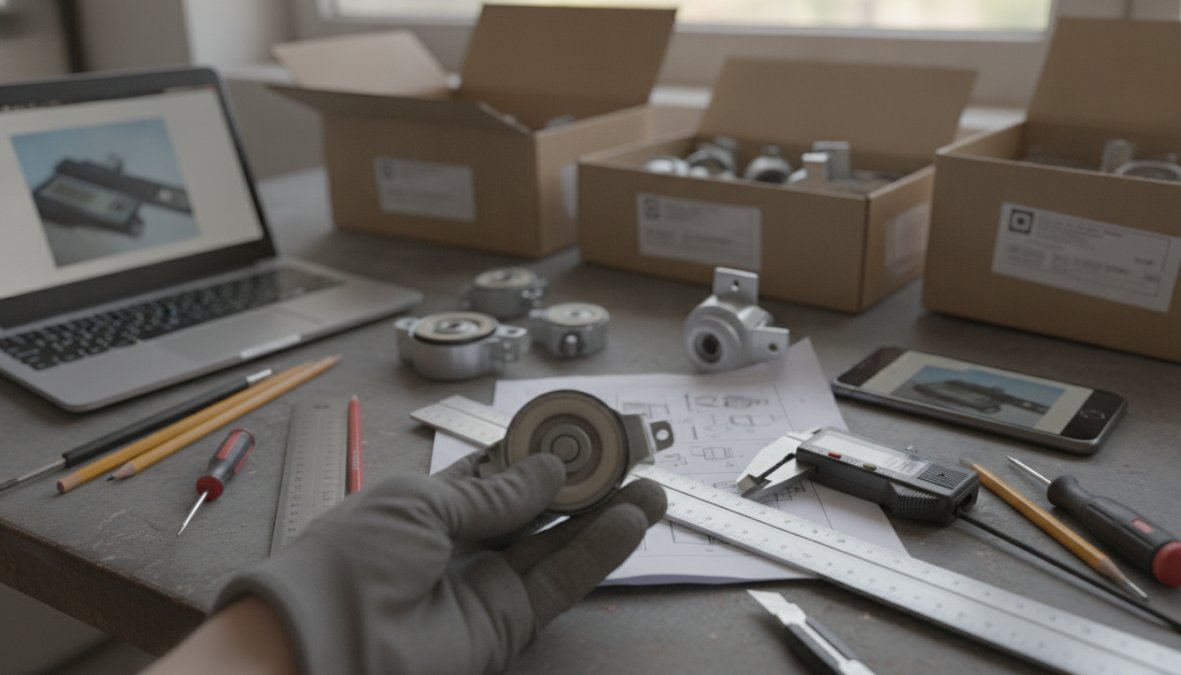
You need three tools: a metal measuring tape, digital caliper, and straightedge ruler. The metal tape handles length measurements; the caliper captures roller diameter with precision; the ruler confirms track alignment and mounting hole positions. A digital caliper costs under $20 and eliminates guesswork on roller diameter.
Gather these items before you start:
- Metal measuring tape (minimum 3 metres)
- Digital or analogue caliper
- 30 cm straightedge ruler
- Pencil and paper (or smartphone notes)
- Camera or smartphone for reference photos
- Flashlight (for examining roller housing in low light)
Measuring Roller Diameter and Width
Roller diameter is the measurement across the wheel itself; width is how far the roller extends side to side. Both affect whether the replacement fits your window’s housing and track system.
Use your digital caliper to measure diameter by closing the jaws gently around the roller’s widest point. Most residential window rollers range from 19 mm to 25 mm diameter. Width measurement requires removing the window sash. Once the sash is out, measure the roller from one outer edge to the other using your metal tape. Standard widths are typically 35 mm to 50 mm for residential windows.
Common roller dimensions:
- Diameter: 19 mm, 20 mm, 22 mm, 25 mm (residential); 16 mm, 28 mm (older or specialised windows)
- Width: 35 mm, 40 mm, 45 mm, 50 mm
When you buy aluminium window rollers online, providing both measurements eliminates ambiguity.
Checking Housing Style and Mounting Holes
The housing, the metal or plastic frame holding the roller, comes in different styles. Some mount at the bottom of the sash; others attach at the top. These differences matter enormously when ordering online because the wrong housing style won’t fit at all.
Examine your current roller assembly closely. Does the housing sit at the bottom or top of the window frame? Is there a visible spring mechanism? Take a photograph showing the full housing assembly, including how it attaches to the sash.
Next, identify the mounting holes. Count how many exist and measure the distance between them using your metal tape. Standard spacing is typically 50 mm, 75 mm, or 100 mm centre-to-centre. Photograph the mounting holes from directly above, this image becomes your reference when contacting online retailers.
Housing styles you’ll encounter:
- Bottom-mounted with spring-loaded carriage (most common)
- Top-hung assembly (less common in modern windows)
- Convex roller profile (curved outward)
- Concave roller profile (curved inward)
If mounting holes are stripped or enlarged, the roller won’t stay secure even if the diameter and width are correct. Check hole condition before ordering; you may need a housing replacement rather than just a roller.
Types of Aluminium Window Rollers: Material and Design Options
Nylon Wheels vs Steel Ball Bearings vs Brass Components
The material your roller is made from affects how smoothly it moves, how long it lasts, and what maintenance it requires. Most residential windows use nylon wheels on a steel or aluminium axle. Nylon is cost-effective and performs well for standard use. Steel ball bearings appear in higher-quality windows, distributing pressure more evenly and handling heavier sashes better than nylon. Ball bearing assemblies cost more but typically last 2-3 times longer.
Brass components, typically found in the housing, resist rust and corrosion. In coastal areas or humid climates, brass housings outlast steel ones significantly. When you buy aluminium window rollers online, specify the material composition. A nylon wheel replacement costs less but may need replacement again in 5-7 years. A ball bearing assembly costs more upfront but lasts 15+ years with minimal maintenance.
Spring-Loaded vs Standard Carriage Assemblies
Spring-loaded carriage assemblies automatically adjust roller pressure against the track as the window moves, compensating for minor track wear. Standard carriage assemblies use fixed brackets without spring adjustment.
Spring-loaded systems are more forgiving of imperfect track alignment. If your track has slight warping or debris, a spring-loaded carriage adapts to it. Standard carriages demand a perfectly clean, aligned track to operate smoothly. However, spring-loaded carriages are more complex to install and adjust. Standard carriages simply bolt in place with no adjustment needed.
Spring-loaded carriages cost 20-30% more but extend the life of your window by compensating for track wear. Standard carriages are simpler to install but demand better track maintenance.
Identifying Legacy and Obsolete Window Roller Parts
Older windows, particularly those manufactured before 2000, often use roller designs that are no longer in production. Legacy rollers typically have smaller diameter (16 mm instead of the modern 19-20 mm standard), different mounting hole spacing, or unusual housing designs.
Australian-made windows from brands like Alumalite, Homestead, and Trend often used proprietary roller designs. These windows are still common in Perth, but finding exact replacements requires specialist suppliers.
To identify whether your rollers are legacy parts, compare your measurements against modern standards. If your roller diameter is 16 mm or smaller, you likely have older hardware. If mounting hole spacing doesn’t match the common 50 mm, 75 mm, or 100 mm intervals, you’ve found a legacy system.
When you buy aluminium window rollers online, photograph your existing roller from multiple angles, including close-ups of the housing, mounting holes, and any manufacturer markings. Many retailers specialise in identifying legacy parts from photos, preventing incompatible orders.
Common legacy window brands in Australia:
- Alumalite (1970s-1990s)
- Homestead (1980s-2000s)
- Trend Windows (1990s-2000s)
- Local Perth manufacturers (pre-2000)
If your window is a legacy system, specialist retailers often stock adapters or modified housings that allow modern rollers to fit older windows, usually cheaper than replacing the entire assembly.
Sliding Window Roller Replacement Guide: Step-by-Step Process
Removing the Window Sash Safely
Before you can measure rollers accurately or replace them, you need to remove the window sash, the movable part of the window that slides up and down or side to side.
Start by opening the window fully. Look for stops or catches that hold the sash in place. Older windows often have wooden or metal stops that need gentle prying. Modern windows typically have release buttons or clips on the frame sides. Press these while gently pulling the sash outward. Once released, support the sash with both hands and lift it slightly to take pressure off the rollers. Slide the bottom of the sash outward, then lift the top. Never force the sash. If it sticks, clean the track thoroughly with a dry cloth and try again.
Once the sash is removed, you have full access to measure the rollers, housing, and mounting holes. Take your measurements now and photograph the entire roller assembly from multiple angles.
Assessing Load Capacity and OEM Specifications
Load capacity, how much weight a roller can support, varies based on material, size, and design. Your window’s load capacity is determined by the heaviest sash weight it must support. Oversized or double-glazed windows have higher requirements than standard windows.
To find OEM (original equipment manufacturer) specifications, check the window frame or sash for manufacturer markings. If you can’t find OEM markings, estimate the sash weight by its size. A standard single-glazed window sash weighs 8-15 kg. Double-glazed sashes weigh 15-25 kg. Your replacement rollers must handle this weight comfortably. Standard residential rollers typically support 20-30 kg per roller.
Weigh your window sash if possible. Remove it, place it on a bathroom scale, and note the weight. This single number eliminates guesswork about load capacity when ordering replacements.
Troubleshooting Sliding Window Issues: Stuck vs Broken Rollers
Not every stuck window needs new rollers. Before you buy aluminium window rollers online, diagnose whether the problem is dirt, misalignment, or actual roller failure.
A stuck window that moves freely once cleaned needs maintenance, not replacement. Open the window fully and inspect the track carefully. Use a dry cloth to wipe the entire track length, paying special attention to corners where rollers run. Then apply silicone-based lubricant (never oil, it attracts dirt) along the track. Slide the window back and forth several times to distribute the lubricant. If the window moves smoothly after cleaning and lubricating, your rollers are fine.
A broken roller exhibits different symptoms. The window moves in a jerky, uneven manner, sliding smoothly then catching or dragging. You might hear a grinding sound. To confirm roller failure, remove the sash and spin each roller by hand. A healthy roller spins freely with minimal resistance. A broken roller either won’t spin or spins with grinding resistance. If the wheel appears cracked, flat-spotted, or visibly damaged, replacement is necessary.
Common diagnostic steps:
- Clean and lubricate the track thoroughly
- Spin each roller by hand to check for grinding
- Use a straightedge to check track alignment
- Inspect roller wheels for visible cracks or flat spots
If movement improves after cleaning, you’ve solved the problem without replacement. If the window still binds or you hear grinding, roller replacement is likely necessary.
Buying the Right Rollers Online: Avoiding Common Mistakes
The most expensive mistake when you buy aluminium window rollers online is ordering the wrong part. This happens because retailers ask for measurements but don’t explain why each one matters, or because you measure incorrectly.
Never rely on visual comparison alone. Two rollers can look identical but have different diameters or mounting patterns. Always provide specific measurements: diameter, width, and mounting hole spacing. Avoid retailers who don’t offer returns or exchanges. Don’t assume all rollers of the same diameter are interchangeable. Width and housing style matter equally.
Be cautious of extremely cheap options. Budget rollers use lower-grade nylon or poorly finished axles that wear quickly. A $15 roller that lasts 5 years is better value than an $8 roller that fails in 2 years.
When ordering online, provide photographs. A clear image of your current roller assembly, showing the housing, mounting holes, and wheel profile, eliminates ambiguity and allows retailers to confirm compatibility before you pay.
Common ordering mistakes to avoid:
- Measuring only diameter, ignoring width
- Assuming all spring-loaded carriages are identical
- Ordering based on appearance without confirming measurements
- Choosing budget options without checking material quality
- Not checking whether your window uses legacy or modern roller designs
If you order rollers and they don’t fit, don’t force them into the housing. Forcing incompatible parts damages the frame and makes correct installation impossible. Contact your retailer immediately and request the right replacement.
Conclusion: Getting Expert Help to Buy Aluminium Window Rollers Online
Measuring and ordering window rollers requires precision, but it’s not complicated once you understand what each measurement represents. Many homeowners struggle because they’re unsure whether their window is a standard modern design or a legacy system requiring specialist parts.
Slide Master Hardware simplifies this process with expert identification via photo submission. Send clear images of your roller assembly, showing the housing, mounting holes, and wheel profile, and our team confirms the exact part you need. We stock rollers for all major Australian window brands and ship Australia-wide from our Perth warehouse, with same-day dispatch for in-stock orders placed before 1 pm AWST.
The right roller choice means your window operates smoothly for years. Get expert identification help and buy aluminium window rollers online with confidence that the parts will fit first time.
Frequently Asked Questions
How do I know which window roller I need before I buy aluminium window rollers online?
Measure your roller's diameter, width, and housing style using a caliper and metal measuring tape. Note the mounting hole positions and carriage assembly type. Check whether your rollers have nylon wheels or steel ball bearings. If unsure, submit a photo of your existing roller to a specialist supplier, many offer free identification services to help you buy the correct replacement parts.
What's the difference between nylon wheels and steel ball bearings in aluminium window rollers?
Nylon wheels are lightweight, quieter, and suitable for standard residential windows with moderate load capacity. Steel ball bearings offer superior durability and load capacity for heavier sliding windows or commercial applications. Brass components provide corrosion resistance in coastal areas. Choose based on your window's weight and usage frequency to ensure long-term performance.
Can I replace rollers on aluminium windows myself, or should I get professional help?
Many homeowners can replace window rollers independently if they have basic tools and follow safety precautions. The process involves removing the window sash, extracting old rollers, and installing new ones aligned with the track. However, if your windows are stuck or you're unsure about load capacity requirements, professional assessment prevents damage. Expert identification services help you buy the exact parts needed.
What should I do if my sliding window rollers are stuck rather than broken?
Before buying replacement rollers, try cleaning the track thoroughly with a dry cloth and lubricating with silicone spray or light machine oil. Stuck rollers often respond to cleaning and lubrication. If the roller still won't move after cleaning, check for debris in the housing or misalignment. Only replace if the roller is genuinely damaged, cracked wheels, worn bearings, or bent axles indicate replacement is necessary.
Getting the exact right roller for your window doesn’t require guesswork. At Slide Master Hardware, we identify your specific roller type from a single clear photo, confirm compatibility, and dispatch your replacement parts the same day. Whether your window uses modern standard rollers or legacy Australian-made hardware, we have the expertise to match you with compatible parts and ensure your window operates smoothly again.
This article was written using GrandRanker