
Table of Contents
- Understanding Sliding Door Lock Types
- How to Install Sliding Door Lock Systems
- Best Sliding Door Locks for Child Safety
- Sliding Glass Door Security Bars Explained
- Replacement Hardware and Handle Sets
- Maintenance and Lubrication for Long-Term Performance
- Common Installation Mistakes to Avoid
- Securing Your Sliding Doors: Key Takeaways
Sliding Door Lock: Complete Security Guide
Last Updated: July 3, 2026
A sliding door lock is essential for securing patios, glass entrances, and internal doors. Choosing the right locking mechanism determines whether your property is secure or vulnerable. At Slide Master Hardware, we’ve helped thousands of Australian homeowners and businesses install the exact sliding door lock systems they need.
Understanding Sliding Door Lock Types
Your choice of sliding door lock depends on your door’s construction, material, and security needs. Most sliding doors use one of three systems: mortise locks, track-mounted systems, and anti-lift mechanisms.
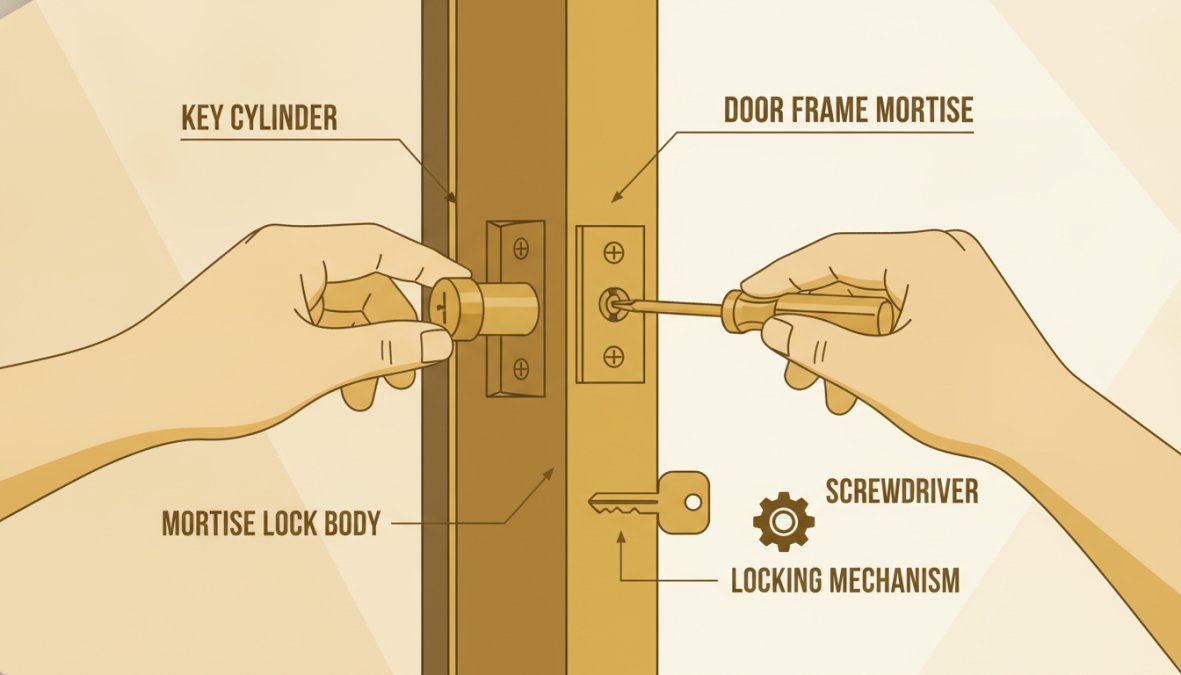
Mortise locks are the strongest option, sitting inside the door frame with a key cylinder that activates an internal latch mechanism. Installation requires precision cutting and is best handled by experienced installers.
Track-mounted locks attach directly to the sliding door track or frame without internal modifications, working well for rental properties or situations where you can’t modify the door structure.
Anti-lift mechanisms prevent thieves from lifting the door upward to disengage it from the track entirely, locking the door into place and preventing vertical movement.
The most secure approach combines two mechanisms: a mortise lock on the door itself plus an anti-lift device on the track. This redundancy means a thief would need to defeat two separate systems to gain entry.
How to Install Sliding Door Lock Systems
Installing a sliding door lock yourself is achievable if you understand your door’s specifications and follow a methodical approach. The most common mistake is purchasing a lock without verifying door thickness and hardware clearance.
Installation Compatibility Guide
Before purchasing any lock, measure your door’s thickness precisely at three points along the door edge to account for warping. Most sliding doors range from 1.75 inches to 2.25 inches thick.
Next, identify your door frame material. Aluminium frames require different installation techniques than timber, and fastening methods change accordingly. Aluminium typically uses self-tapping screws or rivets, while timber accepts standard wood screws.
Check the existing hardware configuration. If your door already has a handle set, verify that a new lock won’t interfere with it. Measure the distance from the handle to the door edge, many mortise locks require at least 2.5 inches of clearance.
Compatibility is everything. A perfectly good lock becomes useless if it doesn’t fit your specific door configuration. Measure twice, order once.
Door Thickness and Hardware Clearance
Door thickness directly determines which mortise lock options work for your application. Standard residential doors are typically 1.75 inches thick, but commercial sliding doors often reach 2 inches or more. Mortise locks are manufactured in specific depths, usually 1.5 inches, 1.75 inches, or 2 inches, and purchasing the wrong size wastes both time and money.
Hardware clearance becomes critical when adding a lock to a door that already has a handle set. The latch mechanism needs space to operate without binding against the handle or frame. Measure from the existing handle centre to the door edge. Most mortise locks require at least 2.5 inches to function properly.
For pocket door installations, space constraints are even tighter. Slim-profile locks or track-mounted systems work better than traditional mortise options. Aluminium-framed doors present another challenge: the frame itself is often hollow, requiring backing plates or special brackets designed specifically for aluminium frames. Timber frames provide solid material throughout and accept standard installation methods.
Best Sliding Door Locks for Child Safety
Parents and childcare providers need specialized locking solutions that prevent children from accidentally opening sliding doors while remaining accessible to adults in emergencies.
Child-Proof Sliding Door Locks
The most effective child-proof locks operate on a principle of inconspicuous placement and require deliberate adult action to open. Lever-operated locks mounted high on the door frame work well because children typically can’t reach them, yet they’re visible to adults who know to look.
Keyed locks offer another layer of protection: a child cannot open the door without the key, regardless of strength or persistence. However, keyed locks require adults to keep the key accessible in emergencies, creating a safety trade-off you’ll need to evaluate.
Sliding door bars, physical barriers that prevent the door from sliding, are among the most reliable child-safety solutions. These security bars sit in the track and prevent movement entirely, offering low-tech, durable protection that’s impossible for a child to defeat through normal operation.
Tamper-Resistant Features
Modern child-proof locks include recessed key cylinders that prevent children from inserting objects into the lock mechanism, hardened steel components that resist cutting or prying, and no external moving parts that a curious child can manipulate.
Look for locks tested against common tampering methods. Installation height matters significantly, locks mounted at or above 54 inches are difficult for children under 12 to reach, yet still accessible to most adults.
A lock that’s too easy for children to open defeats its purpose entirely. Test the lock yourself before considering it child-proof. If you can open it in under 5 seconds without tools, a determined child likely can too.
Sliding Glass Door Security Bars Explained
Sliding glass door security bars provide visible, physical deterrence while offering genuine security improvements. Unlike locks alone, bars prevent the entire door from moving, eliminating a common attack vector: lifting the door off its track.
Security bars come in two primary styles: fixed and adjustable. Fixed bars are permanently mounted and offer maximum security but prevent the door from opening at all. Adjustable bars sit in the track and can be removed when you want to use the door normally.
The most common material is aluminium or steel. Aluminium bars are lightweight and corrosion-resistant (important in Perth’s coastal climate), while steel bars offer greater strength. For residential applications, aluminium is usually sufficient; commercial properties often prefer steel for higher security.
Security Rating and Testing Standards
Security bars should meet or exceed Australian Standards for door hardware security. Testing typically evaluates bars against cutting, prying, and impact. A bar that resists cutting for more than 5 minutes under standard testing conditions offers meaningful security improvement.
Look for bars with hardened steel construction if security is your primary concern. Bars under 6mm diameter are easier to cut than 8mm or thicker options. Manufacturers that transparently share their testing results inspire confidence.
Replacement Hardware and Handle Sets
When your existing sliding door lock fails or you’re upgrading to a modern system, replacement hardware must match your door’s specifications precisely. A replacement handle set that doesn’t fit creates gaps, reduces security, and looks unprofessional.
Most sliding door handle sets consist of three components: the handle itself, the lock body, and the strike plate. All three must work together seamlessly.
Universal Fit Options and Compatibility
"Universal fit" hardware is marketed as a solution for doors of varying sizes, but the term is misleading. What manufacturers call "universal" typically means their hardware works across a range of common sizes, not literally any door.
Before purchasing replacement hardware, verify door thickness, backset distance, hole spacing, frame material, and handle style.
Take a photo of your existing hardware and door from multiple angles before ordering replacement parts. Include measurements and material identification. Slide Master Hardware’s expert team can identify exact compatible replacements from photos, eliminating guesswork.
Finish Selection and Durability
Hardware finish affects both appearance and longevity. Stainless steel and powder-coated aluminium resist corrosion better than bare steel, which is important in Perth’s humid coastal environment. For coastal properties, stainless steel (particularly 304 or 316 grade) is worth the premium cost, lasting 15+ years rather than 5-7 years.
Powder coating adds durability to aluminium hardware. Quality powder-coated finishes last longer than anodized finishes and resist chipping better. Check manufacturer specifications for salt-spray testing results.
Maintenance and Lubrication for Long-Term Performance
A sliding door lock requires minimal maintenance, but what you do matters significantly for longevity. Dirt, salt spray, and lack of lubrication are the primary causes of lock failure in Australian homes.
Clean your lock quarterly by wiping the external surfaces with a dry cloth. For coastal properties, use a slightly damp cloth with fresh water to remove salt deposits, then dry immediately.
Lubricate the key cylinder twice yearly by applying a small amount of graphite powder (not oil-based lubricant). Graphite lubricates without attracting dirt. For the latch mechanism, apply a thin coat of silicone spray to moving parts. Avoid WD-40 or similar penetrating oils, which evaporate quickly and leave tacky residue.
Test your lock’s operation monthly by locking and unlocking it several times. Any resistance, grinding sounds, or stiffness indicates a need for immediate lubrication or professional service.
Common Installation Mistakes to Avoid
The most common mistake is installing a lock without proper door preparation. Drilling pilot holes slightly smaller than your fasteners prevents the door material from splitting.
Failing to account for existing hardware is the second most common error. Measure clearances before you start cutting or drilling anything.
Incorrect backset distance causes the latch to miss the strike plate entirely. Over-tightening fasteners strips threads in aluminium frames or splits timber. Neglecting to shim the strike plate creates gaps between the plate and frame. Not testing the lock after installation catches problems while you can still make adjustments.
Installing a lock backwards or upside-down is surprisingly common and completely defeats its function. Before fastening anything permanently, do a dry run: insert the lock, check that the latch extends properly, and verify that the key cylinder operates smoothly.
Securing Your Sliding Doors: Key Takeaways
A properly secured sliding door starts with understanding your specific door type, thickness, and existing hardware configuration. Whether you choose a mortise lock for maximum security, a track-mounted system for simplicity, or anti-lift bars for physical deterrence, the right choice depends entirely on your property’s unique circumstances.
Installation compatibility is non-negotiable. Measure your door’s thickness, frame material, and hardware clearance before purchasing anything. Child safety requires locks that are genuinely tamper-resistant. Maintenance, particularly regular lubrication and quarterly cleaning, keeps your locks functioning reliably for years.
For Perth-based homeowners and businesses, Slide Master Hardware provides expert guidance on selecting and installing the exact sliding door lock systems your property needs. Our team can identify compatible hardware from photos, ensuring you order the right components first time. With same-day dispatch for in-stock items ordered before 1pm AWST and Australia-wide shipping, you’ll have your security upgrades installed quickly.
Securing your sliding doors shouldn’t require guesswork or trial-and-error installation. Get started with Slide Master Hardware’s expert identification service, submit a photo of your door and our Perth-based team will recommend the exact lock, handle set, and security bars compatible with your specific door type. With our 30-day change-of-mind return policy and full refunds for faulty items, you’re protected every step of the way.
| Lock Type | Best For | Installation Difficulty | Security Level |
|---|---|---|---|
| Mortise Lock | Maximum security, permanent installation | High | Excellent |
| Track-Mounted Lock | Rental properties, non-invasive | Low | Good |
| Anti-Lift Bar | Physical deterrence, visible security | Low | Very Good |
| Keyed Handle Set | Everyday use, moderate security | Medium | Good |
| Security Bar System | Coastal areas, high durability | Low | Excellent |
Australian Standards for door and window hardware safety
Home security best practices from Australian Police
Corrosion resistance testing for coastal hardware
Frequently Asked Questions
What is the most secure type of sliding door lock?
Mortise locks with deadbolt mechanisms and anti-lift features offer the strongest security for sliding doors. These keyed entry locks sit within the door frame itself, making them tamper-resistant. When combined with a security bar or track-mounted latch, they provide comprehensive protection against forced entry and lifting attempts.
Can you install a sliding door lock on any door thickness?
Most universal sliding door locks accommodate standard door thicknesses of 35-45mm, common in Australian homes. However, compatibility depends on your specific door type, pocket doors, barn doors, and patio doors may require different hardware. Always measure your door thickness and check the product specifications before purchasing replacement hardware to ensure proper fit and function.
Are sliding glass door security bars effective?
Yes, security bars are highly effective when used alongside a sliding door lock. They prevent the door from being forced open or lifted from its track. Aluminium adjustable security bars are durable and work on most sliding glass doors. For maximum home security, combine a bar with a mortise lock or keyed entry latch for layered protection.
How do I choose a child-proof sliding door lock?
Look for child-proof locks that require deliberate key operation or multi-step activation, these prevent accidental opening by small children. Mortise locks with concealed key cylinders and tamper-resistant strike plates work well. Ensure the locking mechanism is positioned high enough to be out of reach, and test it regularly. Combination locks with child-resistant designs are also available from most hardware departments.
This article was written using GrandRanker