
Table of Contents
- Understanding Security Door Lock Types
- Best High Security Deadbolt Options for Australian Homes
- Door Lock Grade 1 vs Grade 2: ANSI/BHMA Ratings Explained
- How to Reinforce a Door Lock With Hardware
- How to Install a Security Strike Plate Correctly
- Maintenance and Lubrication for Long-Term Security
- Smart Locks and Cybersecurity Considerations
- Choosing the Right Security Door Lock for Your Needs
Security Door Lock: A 2026 Guide to Types & Installation
Last Updated: July 9, 2026
A security door lock is one of the most critical components of home and commercial property protection. The difference between a standard lock and a high-security door lock can mean the difference between a straightforward break-in and a significantly delayed or deterred intrusion attempt. This guide covers everything you need to know about selecting, understanding, and installing the right security door lock for your property.
Understanding Security Door Lock Types
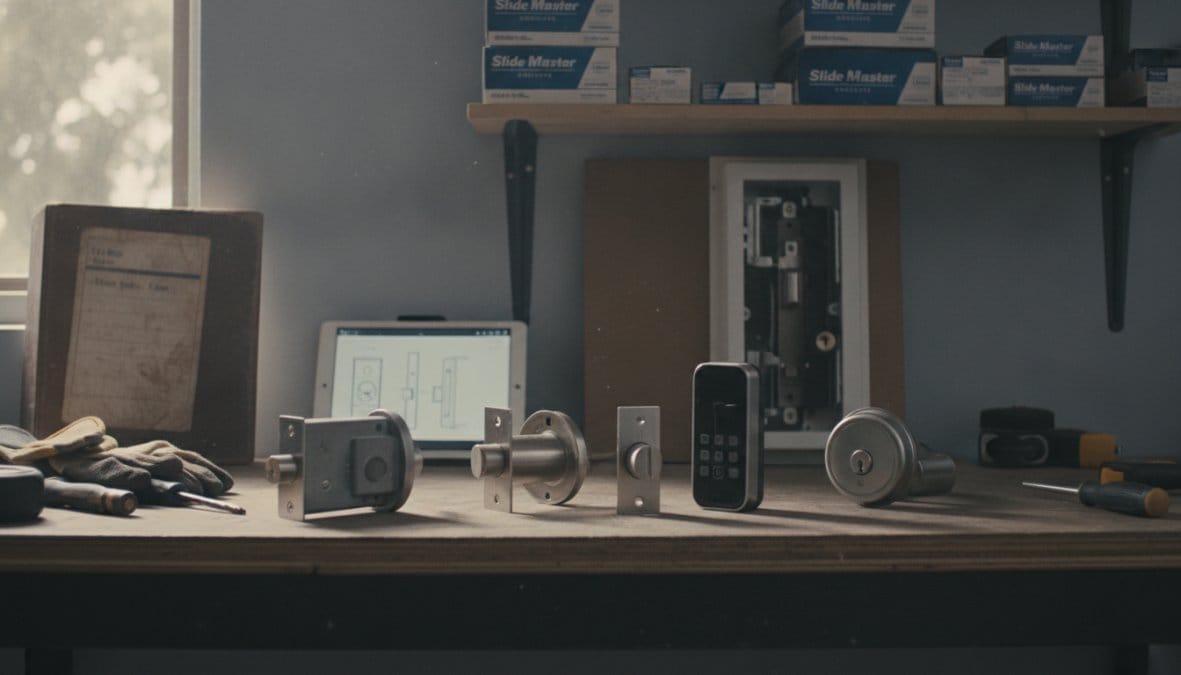
A security door lock can take many forms, each designed for different threat levels and use cases. The most common options fall into two broad categories: mechanical locks and electronic access systems. Mechanical locks remain highly effective when properly installed; electronic systems add convenience but introduce different security considerations.
Deadbolt vs. Deadlatch Mechanisms
A deadbolt is a lock mechanism where the bolt extends fully into the door frame and cannot be retracted by applying pressure to the door. Once locked, it requires a key or internal mechanism to open. A deadlatch uses a spring-loaded bolt that retracts when pressure is applied, making it vulnerable to shimming techniques where a thin piece of material pushes the bolt back.
For any external security door lock, you want a deadbolt. Grade 1 and Grade 2 deadbolts are specifically designed to resist forced entry, with bolts typically made from hardened steel extending at least one inch into the door frame when locked.
When shopping for a security door lock, check the bolt throw length. One inch is the minimum for Grade 2; Grade 1 locks often exceed this. Longer throws provide better resistance to prying attacks.
Keyless Entry and Smart Lock Options
Keyless entry systems and smart locks use keypads, biometric readers, mobile apps, or proximity cards to grant access. They offer convenience and remote access control, but introduce cybersecurity considerations that traditional mechanical locks don’t face. A well-maintained deadbolt cannot be hacked remotely; a smart lock relies on wireless connectivity, battery power, and software that may have vulnerabilities.
The best approach for most properties is a hybrid: a high-security mechanical deadbolt as your primary security door lock, with a smart lock or keypad as a secondary convenience option.
Best High Security Deadbolt Options for Australian Homes
Commercial Grade vs. Residential Grade Locks
Residential-grade locks (typically Grade 2 under ANSI/BHMA standards) are designed for moderate security needs and typical home use. Commercial-grade locks (Grade 1) are built to withstand significantly higher levels of abuse and attempted forced entry, featuring heavier materials, more sophisticated pin configurations, and tighter tolerances.
A commercial-grade security door lock typically uses hardened steel throughout, anti-pick and anti-drill pins, reinforced strike plates, and extended warranties. For most Perth residential properties, a Grade 2 lock from a reputable manufacturer provides excellent security. Grade 1 is worth the investment for high-crime areas, high-value contents, or commercial spaces.
Many property owners install a high-security door lock on the front door but leave side and rear doors with basic locks. Intruders typically target the path of least resistance. A security door lock is only as effective as your weakest entry point.
Jimmy-Resistant Design Features
A jimmy-resistant security door lock is specifically engineered to resist prying attacks, the most common forced entry method. Key features include reinforced bolt housing, anti-pry collar, hardened strike plate, and minimal gap between door and frame.
When evaluating a security door lock for jimmy resistance, examine how far the bolt extends and how the lock body is constructed. Locks with bolts that extend 1.25 inches or more offer better resistance than those with standard 1-inch throws.
Door Lock Grade 1 vs Grade 2: ANSI/BHMA Ratings Explained
The ANSI/BHMA system rates locks on durability, security, and resistance to forced entry, with Grade 1 being the most secure.
Grade 1 Locks undergo rigorous testing including 800,000 cycles of opening and closing, forced entry resistance testing, anti-pick and anti-drill evaluation, and extended durability under commercial use conditions. They’re typically found in commercial buildings and high-security residential applications.
Grade 2 Locks meet a solid standard suitable for residential and light commercial use, with 400,000 cycles of opening and closing and forced entry resistance testing at lower force levels than Grade 1.
For a typical Perth home, a Grade 2 security door lock from a reputable manufacturer is entirely adequate and represents excellent value.
Grade 2 is the appropriate choice for most Australian residential properties. Grade 1 is necessary only for commercial spaces, high-crime areas, or properties with exceptional security requirements. Match the grade to your actual risk profile.
How to Reinforce a Door Lock With Hardware
Installing a high-security door lock is only half the equation. The strongest lock is useless if mounted on a weak door frame or installed incorrectly. The most common failure point in forced entry attempts is the strike plate and surrounding door frame, not the lock itself.
Effective door reinforcement involves installing a heavy-duty strike plate with long screws (at least 2.5 inches) that penetrate deep into the structural framing, adding a door reinforcement plate on the interior side, and using longer screws throughout any lock hardware. A properly reinforced door with high-security hardware can withstand 400+ pounds of force without failure.
Strike Plate Reinforcement Essentials
The strike plate is the metal component mounted on the door frame that receives the bolt when the door is locked. A reinforced strike plate is specifically designed to resist the forces applied during a break-in attempt, featuring longer screw holes, larger surface area, heavier gauge metal, and recessed design.
When installing a reinforced strike plate, screw selection is critical. Standard door installation uses 0.75-inch screws; for proper reinforcement, you need 2.5 to 3-inch wood screws that penetrate into the structural framing behind the door frame.
When you replace your strike plate, check what’s behind the door frame. If there’s only thin veneer or hollow space, you may need to install backing plates or reinforce the frame itself.
How to Install a Security Strike Plate Correctly
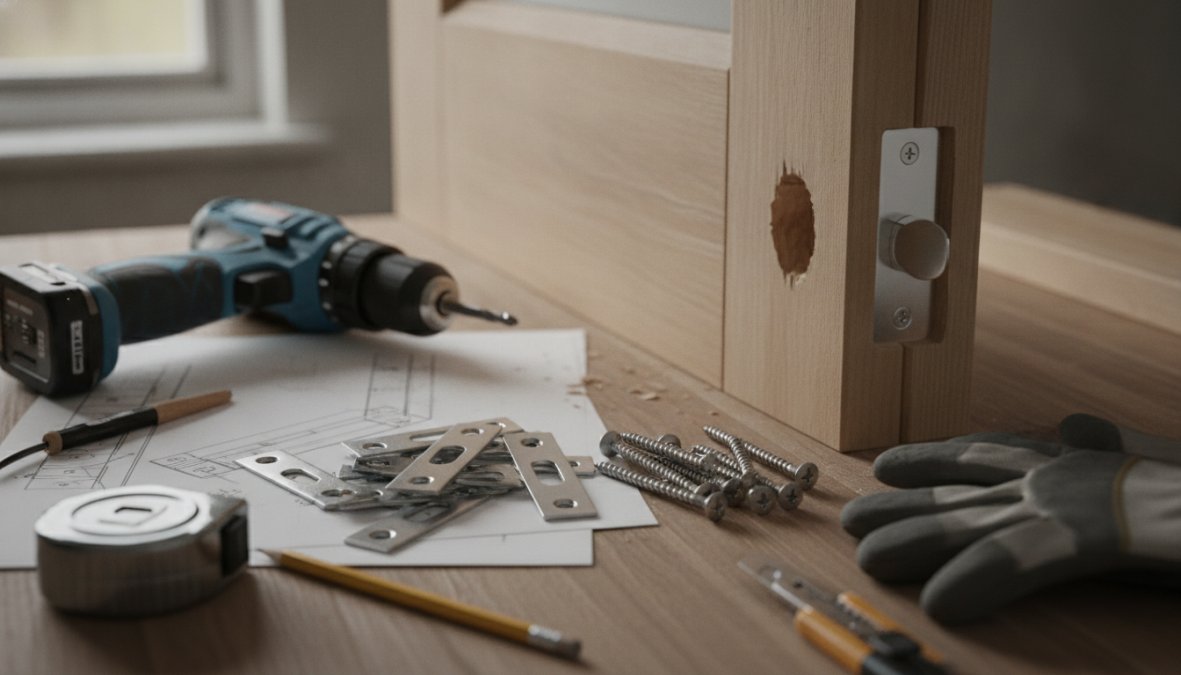
Installing a security strike plate properly takes 15-30 minutes and requires basic tools.
Installation steps:
- Remove the old strike plate and note the position and bolt alignment
- Position the new strike plate, ensuring the bolt hole aligns properly with the lock mechanism
- Mark where the new screw holes will be
- Drill pilot holes slightly smaller than your screws
- Drive 2.5 to 3-inch screws through the strike plate into the structural framing
- Close the door and verify that the bolt enters the strike plate smoothly
- Ensure the strike plate sits flush against the frame with no gaps
Compatibility With Existing Door Frames
Timber frames are the most common in Perth. They’re straightforward to work with: drill pilot holes and drive long screws into the solid wood, ensuring screws penetrate far enough to grip structural framing rather than just the veneer layer.
Metal frames require self-tapping metal screws or bolts with backing plates rather than standard wood screws. Composite or hollow frames present a challenge; you may need to install backing plates on the interior side or reinforce the frame with additional wood or metal bracing.
Before purchasing hardware, examine your door frame carefully to determine its material and thickness. If uncertain, consult a security hardware specialist.
Maintenance and Lubrication for Long-Term Security
A security door lock is only as effective as its condition. Regular maintenance and proper lubrication are essential for long-term performance.
Lubrication schedule: Lubricate your security door lock every 6-12 months, or more frequently if you notice stiffness. Use only dry lubricants designed for locks, graphite powder, PTFE-based dry lubricants, or silicone-based dry lubricants. Apply lubricant sparingly by injecting a small amount into the keyhole and working the key in and out several times.
Never use oil-based lubricants on security door locks. These products attract dust and debris, which accumulates inside the lock mechanism and causes jamming and corrosion. Dry lubricants are the only appropriate choice.
Inspect your security door lock regularly for corrosion or rust, loose components, key wear, and bolt stiffness. Most security door locks last 10-15 years with proper maintenance. After that timeframe, replacement is worth considering.
Smart Locks and Cybersecurity Considerations
Smart locks offer genuine convenience and remote access control, but introduce digital vulnerabilities. Common cybersecurity risks include wireless interception, app vulnerabilities, battery failure, network dependence, and manufacturer security practices.
Best practices for smart lock security include choosing established manufacturers with strong security records, enabling two-factor authentication, using strong unique passwords, keeping firmware updated, using a secure home network, and maintaining a mechanical backup.
For most Australian properties, a hybrid approach works best: a high-security mechanical deadbolt as your primary security door lock, with a smart lock or keypad as a secondary convenience option.
Choosing the Right Security Door Lock for Your Needs
Start by assessing your risk profile:
- Residential property in low-crime area: Grade 2 deadbolt with standard reinforcement
- Residential property in moderate-crime area: Grade 2 deadbolt with reinforced strike plate and door reinforcement hardware
- Residential property in high-crime area or with high-value contents: Grade 1 deadbolt with comprehensive door reinforcement
- Commercial property or high-security residential: Grade 1 deadbolt with additional security measures
Next, consider the specific door and frame, and think about convenience requirements. The most common choice for Perth residential properties is a Grade 2 deadbolt with a reinforced strike plate and long installation screws.
| Lock Type | Best For | Security Level | Maintenance | Cost Range |
|---|---|---|---|---|
| Grade 2 Deadbolt | Residential homes, low-crime areas | Good | Minimal (annual lubrication) | Moderate |
| Grade 1 Deadbolt | Commercial, high-crime areas, high-value homes | Excellent | Minimal (annual lubrication) | Higher |
| Keypad Lock | Convenience without electronic dependence | Good | Battery replacement annually | Moderate |
| Smart Lock | Maximum convenience, requires active management | Good (if well-designed) | Firmware updates, battery replacement | Higher |
| Combination System | Best security + convenience balance | Excellent | Minimal mechanical + firmware updates | Higher |
Protecting your property starts with understanding what a security door lock actually does and matching it to your specific needs. Whether you’re securing a Perth home or a commercial space, the right combination of mechanical security and proper installation provides genuine protection against forced entry. Contact a security hardware specialist with photos of your door and frame for expert guidance on the best security solutions for your property.
Frequently Asked Questions
What is the most secure type of security door lock?
Grade 1 deadbolts with ANSI/BHMA certification offer the highest security for residential properties. These locks feature hardened steel cylinders, security pins, and reinforced strike plates that resist force and picking. Commercial-grade locks provide even greater durability for high-traffic environments. The combination of a quality deadbolt with proper door reinforcement hardware creates the most secure setup.
How do I know if my door lock is Grade 1 or Grade 2?
Check the manufacturer's documentation or packaging, Grade 1 and Grade 2 ratings are always listed by certified locks meeting ANSI/BHMA standards. Grade 1 locks undergo more rigorous testing for force resistance and durability. If unsure, contact the lock manufacturer with your lock's model number, or consult a local locksmith who can assess your security door lock's rating and recommend upgrades if needed.
Can I install a security door lock myself, or do I need a professional?
Many homeowners successfully install security door locks themselves if they have basic tools and follow manufacturer instructions carefully. However, proper installation requires precise measurements, correct backset spacing, and secure strike plate fastening. If your door frame is damaged, non-standard, or you're uncertain about compatibility, professional installation ensures your security door lock functions optimally and provides maximum protection.
Are smart locks as secure as traditional deadbolts?
Smart locks offer convenience but introduce cybersecurity considerations absent in mechanical deadbolts. Quality smart locks include backup mechanical keys and encryption, though they depend on batteries and network connectivity. For maximum security, combine a Grade 1 deadbolt with a smart lock feature, or use smart locks primarily for access control while maintaining a traditional deadbolt as your primary security door lock mechanism.
This article was written using GrandRanker